
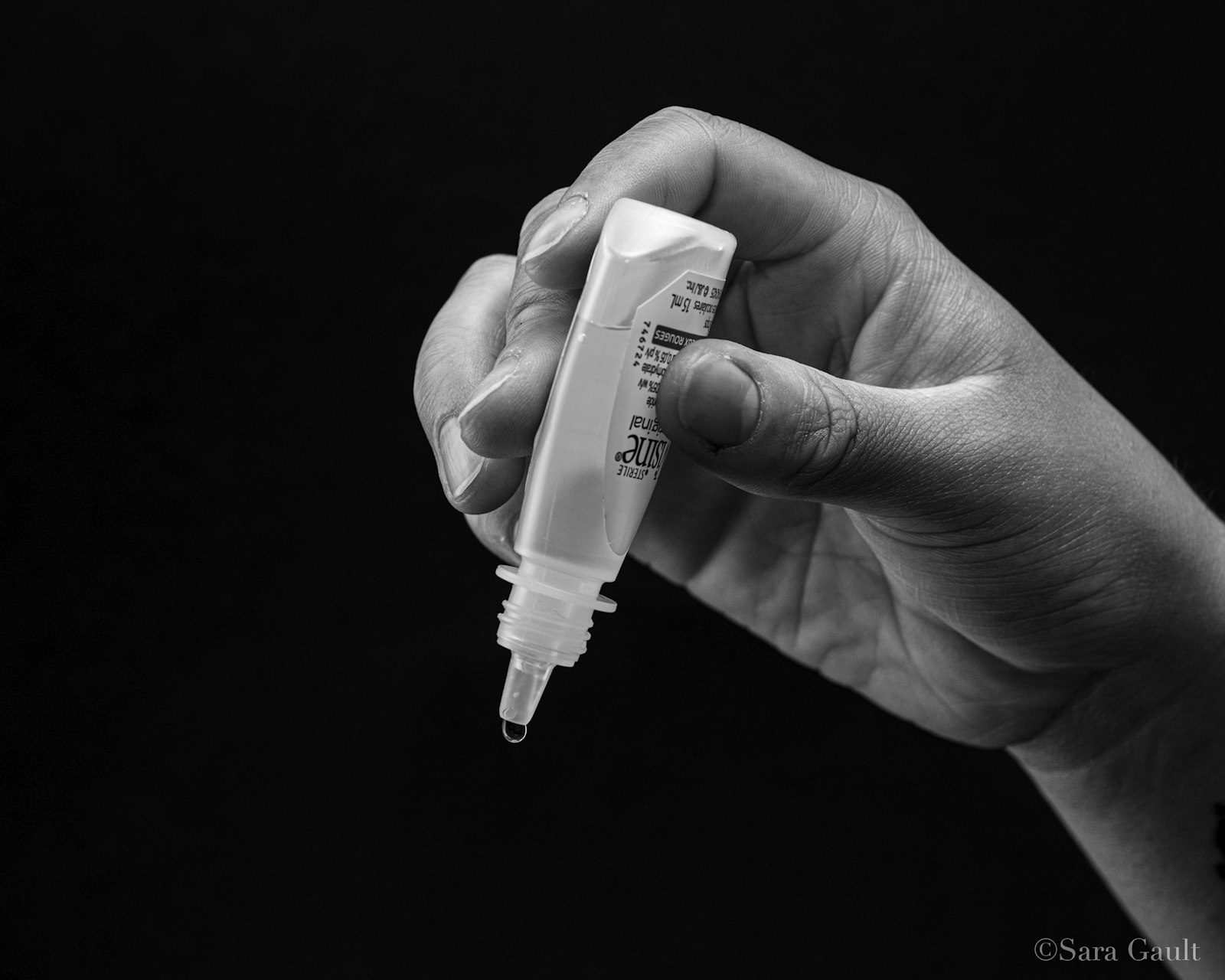


There is a particular kind of tired that no concealer can hide. You can blur the shadows, lift the lids with mascara and add a strategic dab of highlighter to the inner corners. If the whites of your eyes look like a road map after a long flight, a late night or a day at the screen, the whole face reads as exhausted. The beauty industry has known this for decades. Now the US Food and Drug Administration has given it a new tool.
On 16 October 2026 the FDA approved Brytly, a new over-the-counter eye drop from Alcon for the relief of eye redness caused by minor irritations. The active ingredient is apraclonidine at a concentration of 0.125 percent. According to the FDA, this is the first nonprescription eye drop to contain apraclonidine at all.
An old glaucoma drug with a new job
If the name of the ingredient sounds vaguely clinical, that is because it is. Apraclonidine in higher concentrations has been a prescription medicine for years. Eye doctors use it to lower pressure inside the eye in people with glaucoma and around certain laser procedures. The FDA notes that these stronger versions remain prescription only.
The new drop belongs to a family of substances called alpha-2 adrenergic agonists. In plain English, they act on receptors in the blood vessels of the eye, which become narrower, so the eye looks less red. If you think that story sounds familiar, you are right. The same pattern already played out with Lumify, the eye whitener from Bausch and Lomb. Its active ingredient, brimonidine, was first approved at a higher dose as the glaucoma drug Alphagan, as the American Academy of Ophthalmology explains. Lumify was approved in December 2017 and reached store shelves in 2018.
Pharma marketing loves this kind of second career. A drug developed for a serious condition gets a gentle makeover, a lower dose and a cosmetic purpose. Think of it as the pharmaceutical version of a retired opera singer recording a perfume advert.
What Alcon promises and what is still missing
According to Alcon, a single drop works within one minute and lasts up to 12 hours. The company positions that as up to 50 percent longer than Lumify, which advertises up to eight hours. Be aware that this comparison rests on label claims, not on a published head-to-head trial, as the financial news site Mugglehead points out.
Alcon also says studies showed a low risk of rebound redness and of tachyphylaxis, the technical term for a drug gradually losing its effect with repeated use. Review of Optometry notes that the company did not disclose figures to back this up. So far, then, the most interesting claims are exactly the ones you cannot yet check.
The approved label is clear on the rules. Brytly is approved for people aged 12 and older. It should not be used more than twice a day. Contact lenses must come out before use and can go back in after at least ten minutes. Anyone using other eye drops should wait five minutes between products. Alcon says the drops will be available online and at major retailers in the United States in the coming months. No launch date and no price have been announced so far. None of the reports mention plans for Europe.
Why rebound redness matters
To understand why ophthalmologists watch this category so closely, you need to know a little about the older generation of eye whiteners. Classic drops based on ingredients like tetrahydrozoline also narrow the blood vessels. The American Academy of Ophthalmology explains the catch: when the effect wears off, the vessels can dilate even more than before. The eye looks redder than it did originally, so you reach for the bottle again. Some people end up in a loop that looks a lot like dependence.
The newer alpha-2 agonists are said to carry a lower risk of this rebound effect. Bausch and Lomb argued that Lumify works differently on the vessels than older drops. The Academy presented that as the manufacturer’s claim and quoted ophthalmologist Laurie Gray Barber, who questioned the long-term effects because the original studies lasted only a few weeks. Her advice was that occasional short-term use is one thing, but regular long-term use is something she would rather patients avoided.
Red eyes are a symptom, not a style choice
Here lies the real point of this story. It is less glamorous than any before and after photo. Red eyes are not only a cosmetic issue. They can be a sign of allergies, conjunctivitis, a corneal injury, glaucoma or bleeding in the eye. A drop that makes the white look whiter does nothing to treat the cause. In the words of Dr. Barber, quoted by the Academy, doctors do not want patients using eye drops that mask symptoms of their disease.
The FDA puts it more soberly on its own page. Stop using the drops and see a doctor if you have eye pain, changes in vision, redness or irritation that continues, or symptoms that get worse or last longer than three days.
Our interpretation: Brytly fits neatly into a larger trend in which the line between medicine and beauty keeps getting thinner. The FDA describes the approval as part of its goal to expand access to nonprescription treatments. For occasional redness after a long day, that is a reasonable convenience. The bright-eyed look that pop music has celebrated from Art Garfunkel to Bonnie Tyler should still not become a daily routine you squeeze from a bottle. If your eyes are red every day, the most useful thing to look at is not the mirror. It is the reason.
This article is for general information only and does not replace advice from a doctor or pharmacist. If you have eye pain, vision changes or persistent redness, please see a healthcare professional.
Key facts at a glance
- What: The FDA approved Brytly, an over-the-counter eye drop with apraclonidine 0.125 percent from Alcon, for relief of eye redness caused by minor irritations on 16 October 2026.
- First: According to the FDA, Brytly is the first nonprescription eye drop containing apraclonidine. Higher concentrations remain prescription medicines for glaucoma and certain laser eye procedures.
- Use: Brytly is approved for people aged 12 and older and should be used no more than twice a day. Contact lenses must be removed before use and reinserted after at least ten minutes.
- Status: Alcon says Brytly will reach US retailers and online stores in the coming months. No launch date or price has been announced.
- Note: for general information only, not medical advice.
FAQ
What are Brytly eye drops?
Brytly is a new over-the-counter eye drop from Alcon that relieves redness caused by minor eye irritation. It contains apraclonidine 0.125 percent and was approved by the FDA on 16 October 2026.
How is Brytly different from Lumify?
Brytly uses apraclonidine while Lumify uses brimonidine, though both belong to the same drug class. Alcon says Brytly lasts up to 12 hours compared with up to eight hours for Lumify, but this is based on label claims rather than a direct comparison trial.
When should you see a doctor about red eyes?
The FDA advises stopping the drops and seeing a doctor if you have eye pain, vision changes, ongoing redness or irritation. The same applies if symptoms get worse or last more than three days.
Sources
- FDA Approves New Nonprescription Eye Drop for Relief of Eye Redness (U.S. Food and Drug Administration)
- New OTC Eye Whitener Approved (Review of Optometry)
- FDA approves Brytly redness-relieving drop (Healio)
- FDA Approves Alcon’s OTC Apraclonidine Eye Drop for Redness Relief (Ophthalmology Management)
- Alcon wins FDA approval for BRYTLY eye drops (Mugglehead)
- New Over-the-Counter Eye-Whitening Drop Hits Store Shelves (American Academy of Ophthalmology)