
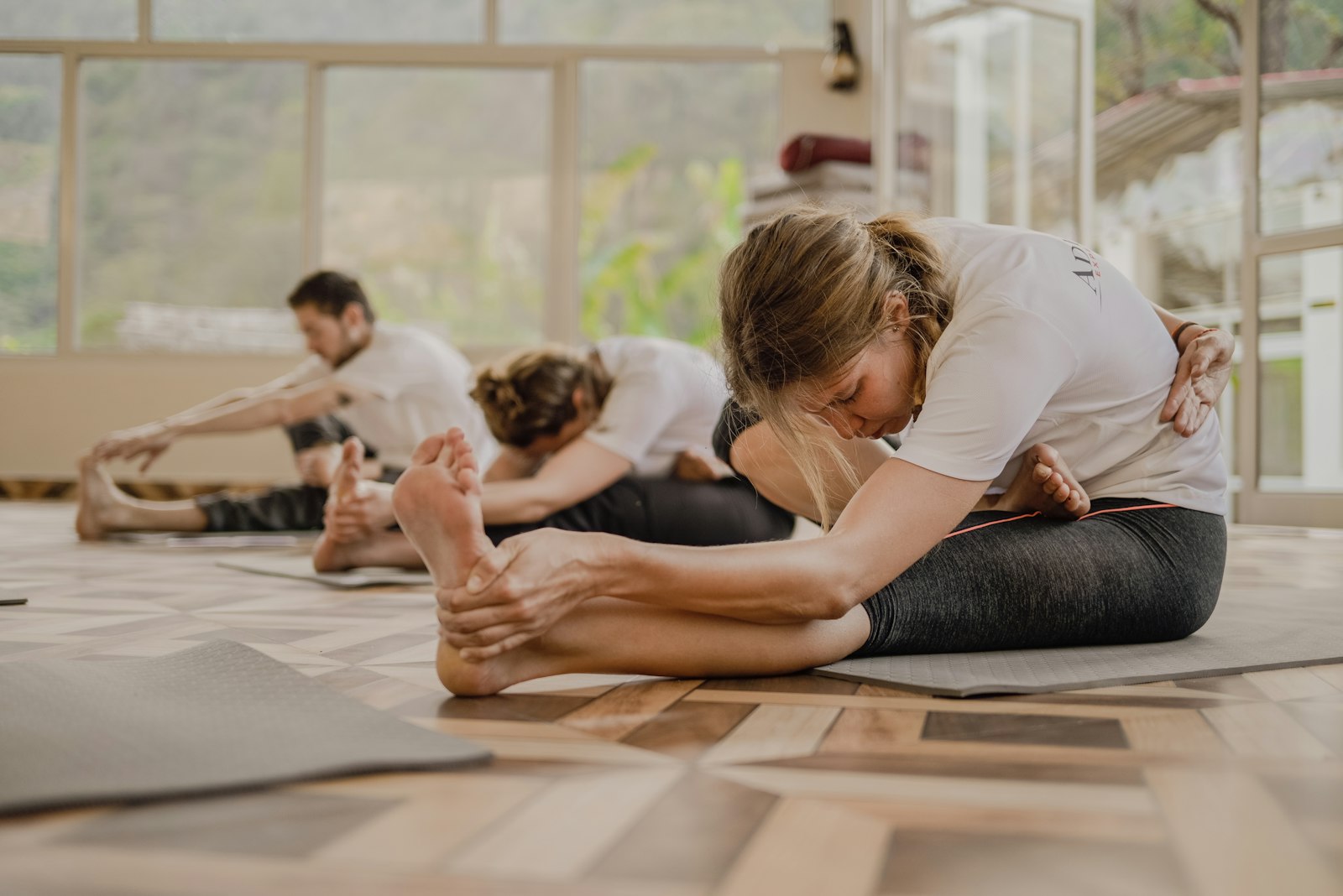


Yoga has had quite the image makeover over the past few decades. In the West it became shorthand for expensive leggings, studio playlists and that one friend who says “namaste” when leaving brunch. In a Chicago conference hall on November 7, it showed up in a far less glamorous outfit: as cardiac rehabilitation for people with heart failure. And the results of the trial, called Yoga-CaRe, are both encouraging and refreshingly honest about their limits.
Presented as late-breaking science at the American Heart Association’s Scientific Sessions 2026, the study enrolled almost 3,500 adults in India with heart failure with reduced ejection fraction, the type in which the heart’s main pumping chamber squeezes out less blood than it should. The headline finding: people in the yoga program reported a better quality of life and walked farther than those receiving enhanced standard care. The finding that did not make the headline: yoga did not significantly reduce deaths, hospitalizations or strokes.
What the yoga heart failure trial actually tested
The trial was led by Dorairaj Prabhakaran of the Centre for Chronic Disease Control in India. Between April 2023 and December 2025, researchers randomized 3,492 patients at 16 medical centers. The median age was 57, about 27 percent were women and nearly four in ten were recruited while still in hospital. About half had symptoms that limited them noticeably in everyday activity.
The yoga group received a structured program led by a certified yoga and naturopathy practitioner: 20 supervised sessions over three months, then one session every three months, plus a health education booklet titled “Healthy Living with Heart Failure” and tailored advice. The comparison group got three health education sessions and the same booklet. Think of it as a carefully choreographed class versus a well-meaning pamphlet with a follow-up chat.
The results: feeling better is not the same as fewer hospital stays
At three months, the yoga group’s score on the Minnesota Living with Heart Failure Questionnaire, a standard measure of how the condition affects daily life, improved by about 8 points more than in the control group. On this scale lower is better. The difference was statistically significant. In the six-minute walk test, participants doing yoga managed on average 25.5 meters more. Their self-rated health on a standard questionnaire was also better.
Then comes the part that keeps this from becoming a wellness influencer’s dream caption. Over a median follow-up of 15 months, 21.0 percent of the yoga group died, were hospitalized or had a stroke, compared with 22.8 percent in the control group. That gap was not statistically significant. In other words, the trial cannot show that yoga changes the hard outcomes doctors care most about.
Is that disappointing? Not necessarily. Quality of life is not a consolation prize in heart failure. It is often exactly what patients say matters most: being able to climb stairs, go shopping or play with grandchildren without having to stop for breath. A therapy that helps with that, at low cost, has real value even if it does not rewrite survival statistics.
The fine print you should read
The researchers themselves point to several caveats. Participants knew which group they were in, because you cannot exactly hide a yoga mat. The yoga group also had far more contact with instructors, 20 sessions versus three. Some of the benefit may come simply from that extra attention and structure. The findings come from a conference abstract that has not yet been published in a peer-reviewed journal, so the full data are still to come. And the trial took place in India, where yoga is part of everyday culture. Prabhakaran noted that yoga is “culturally acceptable in countries like India,” which also means results could look different in, say, Munich or Manchester.
Why this matters beyond India
The bigger story is about access. Classic cardiac rehab, with supervised exercise in a hospital gym, is well established but widely underused. Such programs are “inaccessible to many” with poor uptake in many countries, Prabhakaran said, according to the American Heart Association. Figures from Australia’s Heart Foundation, cited by Lifestyle News, show the scale of the problem: in one study of 49,000 patients, only 30 percent were referred to cardiac rehabilitation and just 28 percent of those actually attended.
A yoga program needs little equipment, can partly be delivered online and can be taught by trained practitioners rather than scarce specialist staff. That makes it attractive for health systems with tight budgets. The AHA release notes that a formal cost-effectiveness analysis has not yet been done and that the next step is testing whether the program can be scaled up and transferred to other countries.
For you as a reader, the takeaway is not to swap your cardiologist for a Sun Salutation. If you or someone close to you lives with heart failure, the trial is a good reason to ask the care team whether a supervised, gentle movement program could fit into treatment alongside medication. Yoga is not a miracle cure here. It may, however, be one of the more pleasant ways to feel a little more like yourself again, which in heart failure is no small thing.
This article is for general information only and does not replace medical advice. If you have heart problems, please talk to your doctor before starting a new exercise program.
Key facts at a glance
- What: The Yoga-CaRe trial tested a yoga-based cardiac rehabilitation program in 3,492 adults with heart failure with reduced ejection fraction at 16 centers in India.
- When: The results were presented as late-breaking science at the American Heart Association Scientific Sessions 2026 in Chicago on November 7, 2026.
- Result: After three months, the yoga group’s quality of life score improved by about 8 points more than the control group and participants walked 25.5 meters farther in a six-minute test.
- Limit: Death, hospitalization or stroke occurred in 21.0 percent of the yoga group versus 22.8 percent of the control group, a difference that was not statistically significant.
- Note: for general information only, not medical advice.
FAQ
Does yoga help people with heart failure?
In the Yoga-CaRe trial, yoga-based cardiac rehab improved quality of life and walking distance in people with heart failure with reduced ejection fraction. It did not significantly reduce deaths, hospitalizations or strokes.
What did the yoga heart failure program involve?
Participants attended 20 supervised yoga sessions over three months led by a certified yoga and naturopathy practitioner, followed by one session every three months, plus health education.
Has the Yoga-CaRe heart failure study been peer reviewed?
Not yet. The findings were presented as a conference abstract at the American Heart Association Scientific Sessions 2026 and are considered preliminary until published in a peer-reviewed journal.
Sources
- Yoga-based cardiac rehab improved quality of life in people living with heart failure (American Heart Association)
- AHA Scientific Sessions 2026 Late-Breaking Trials (Radcliffe Cardiology)
- Yoga Improves Quality of Life in Heart Failure, Big Trial Finds (Lifestyle News)
- Yoga-CaRe Improves Quality of Life and Exercise Capacity in People with Heart Failure (The Tribune)