The colour you will see everywhere in 2028 has already been chosen. Not by you, not by your favourite designer and certainly not by that one friend who insists she wore it first. It was announced in March 2026: a warm, rusty earth tone called Radiant Earth. By the time it reaches the shops, it will feel like your own idea.
We like to believe trends appear out of nowhere, like weather. One day everyone wears wide jeans and a certain shade of green and it feels spontaneous. It is not. Behind every trend sits a chain of decisions, some made years before you see the result. In part one of our video series The Trend Machine we open that chain link by link. Here is the written version.
Colour comes first, two years ahead
Trends start with colour for a very practical reason: yarn has to be dyed and fabric produced long before a single garment is sewn. That is why the colour direction is usually set around two years before clothes hit the rails. The forecasting company WGSN and its colour partner Coloro announced Radiant Earth as their Colour of the Year 2028 on March 19, 2026. Their pick for 2027 was a vivid blue called Luminous Blue. The reasoning behind the earthy 2028 shade: in a world that feels chaotic, people crave something grounding and stable. A colour as a mood.
Then there is the name everybody knows. Pantone has picked a Colour of the Year every December since 1999. For 2026 it chose Cloud Dancer, the first white in the programme’s history. Critics called it boring, some called it political. The part most people miss: Pantone partners with brands that release products in exactly that shade, from sticky notes to modelling clay. So is it a prediction or a decision? Probably both. When enough companies believe a colour will be big, they produce it, and once it sits on every shelf, it is big. That is the first gear of the trend machine: a forecast that helps fulfil itself.
Fabric decides the shape
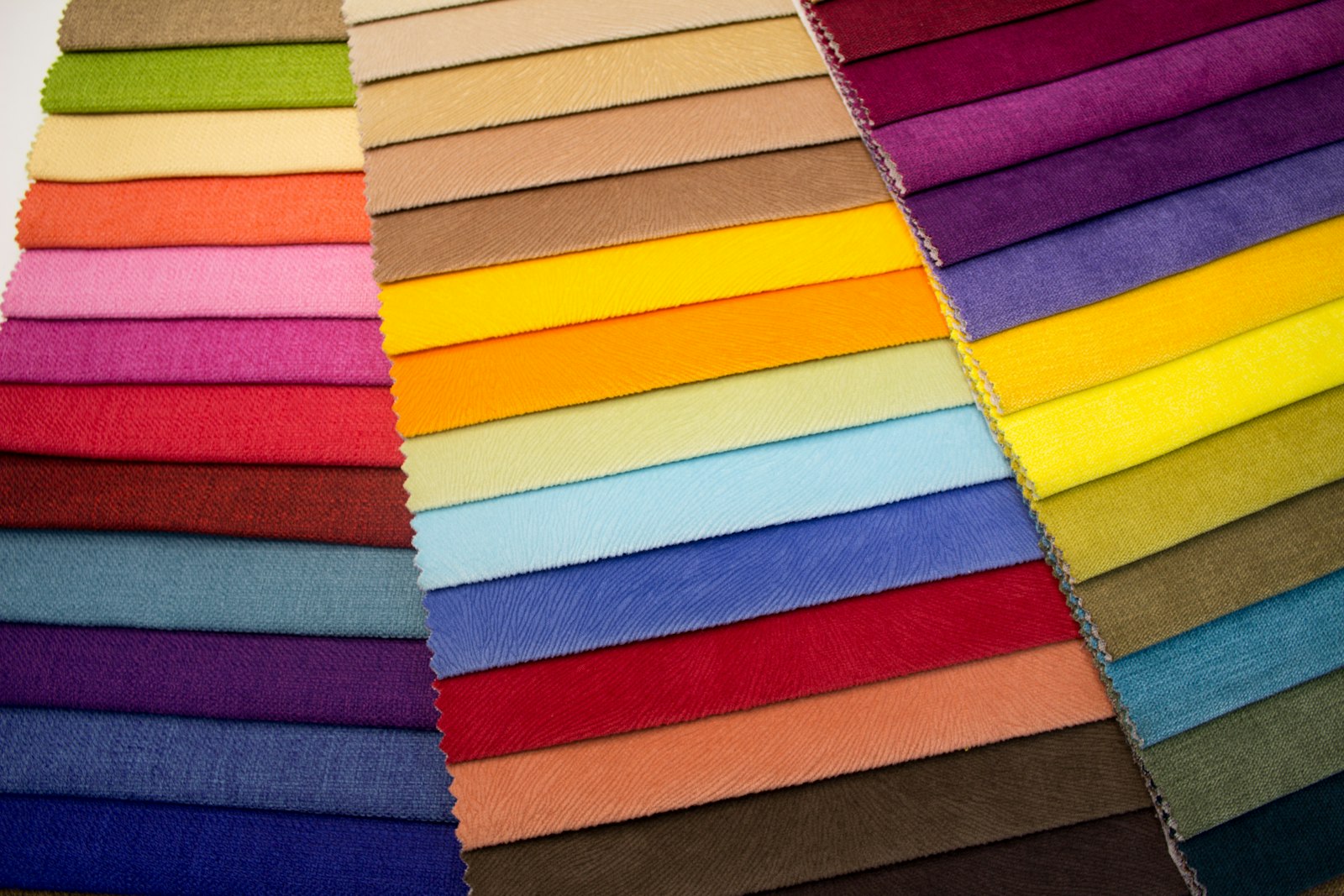
Next comes fabric. Twice a year, mills from around the world present their newest materials at trade fairs, the most famous being Première Vision in Paris. Its latest edition ran from September 1 to 3, 2026, showing fabrics for autumn and winter 2027/28, more than a year before those clothes exist. One designer put it neatly on the fair’s own website: her real season starts at Première Vision, because the fair is two years ahead of the market.
And fabric is never neutral. A heavy double faced wool practically forces you into a structured coat. A fluid silk wants to become a slip dress. When mills push a certain kind of material, they quietly decide which shapes are easy to make and which shapes you will end up seeing everywhere. The tailor proposes, the textile disposes.
The people who predict moods
Then come the professional forecasters. WGSN, the biggest of them, sells trend reports to brands worldwide. It says it combines social media, search data, sentiment, runway shows and what is actually selling, and that its AI model reaches 94 percent accuracy up to a year ahead. That figure comes from the company itself, not from an independent audit, but brands pay serious money for these reports.
The fascinating part: good forecasters do not really predict clothes. They predict moods. WGSN’s Francesca Muston once explained to Popular Science how the company saw the loungewear wave coming long before it arrived. Young people were being priced out of big cities, gig work was booming, delivery services were everywhere and anxiety levels were rising. Add those signals together and you get people spending more time at home who want to feel comfortable and still look put together. The result was years of soft sets, knit trousers and cosy everything. So when you feel drawn to a cardigan in a calming colour, it may not be random taste. It may be the wardrobe version of how a whole generation feels, spotted years earlier by someone with a spreadsheet.
Runways, buyers and two directions
Around six months before a season, designers show their collections in New York, London, Milan and Paris. This is the part everyone sees. For a long time, fashion theory claimed trends flow only from the top down. In 1904 the German sociologist Georg Simmel described it as a game of chase: the upper classes adopt a new style to stand out, everyone else copies it and as soon as it becomes common, the elite move on. That is the trickle down theory.
In the twentieth century the arrow flipped. Punk, hip hop, skate culture and sneakers all started on the street and moved up to the runway, a process the British style writer Ted Polhemus called bubble up. Today both directions run at the same time, sometimes in the same collection.
Between the runway and you sits one more filter most people forget: the store buyer. After every fashion week, buyers from department stores and online shops decide which pieces they actually order. After Milan’s spring 2027 shows, retailers told WWD they were excited about statement skirts, Bermuda shorts and lingerie inspired dressing. A look that no buyer orders simply never reaches you, however brilliant it looked under the spotlights.
The algorithm: trends in hours
For decades this system moved in seasons. Then social media pressed fast forward. On TikTok and Instagram, micro trends can rise and peak within days, and social media analysts at Later report that some aesthetics peak within 48 to 72 hours of taking off. Entire cores appear and vanish: coastal grandma, mob wife, clean girl. In the summer of 2024 a whole mood called brat spread from the cover of a single Charli XCX album. Fast fashion companies react within weeks, which is why micro trends and overconsumption go hand in hand.
The key distinction: a micro trend is a moment. A macro trend, the kind colour institutes, mills and forecasters work on, is a direction that lasts for years. For a closer look at the speed problem, read our piece on how even Miu Miu felt a trend cool down.
So who really decides?
Our reading: nobody decides alone. A trend is a chain of bets. The colour institute bets on a mood, the mill bets on the colour, the designer bets on the fabric, the buyer bets on the designer and the algorithm amplifies whatever gets the most attention. Each bet makes the next one safer until the trend feels inevitable.
But there is one gear the machine cannot control: you. The final vote happens at the till, and plenty of carefully forecast trends flop because people simply do not buy them. Our practical tip: before you buy something because it is everywhere, ask one question. Is this a moment or a direction? Spend real money on directions. Have fun with moments, but cheaply and preferably second hand.
There is one pattern the trend machine never escapes: the past. Every twenty to thirty years an old decade comes back, and right now it is the nineties. Why that is happening, and why your boss may be responsible, is the subject of part two of The Trend Machine.
Key facts at a glance
- Colour: WGSN and Coloro named Radiant Earth the Colour of the Year 2028 on March 19, 2026; their 2027 colour is Luminous Blue.
- Pantone: Pantone’s Colour of the Year 2026 is Cloud Dancer, the first white since the programme began in 1999.
- Timeline: Colour is set about two years ahead, fabric 18 to 24 months ahead, collections about six months ahead and micro trends can peak within 48 to 72 hours.
- Fabric fair: Première Vision Paris showed fabrics for autumn/winter 2027/28 from September 1 to 3, 2026.
- Theories: Georg Simmel described trickle down fashion in 1904; Ted Polhemus coined bubble up for street styles moving to the runway.
FAQ
Who decides fashion trends?
No single player. Colour institutes, fabric mills, forecasting agencies, designers, store buyers and social media algorithms each place a bet, and every bet makes the next one more likely. Shoppers have the final say at the till.
How far in advance are fashion trends planned?
Colour directions are usually set about two years before clothes reach stores, fabrics 18 to 24 months ahead and runway collections about six months ahead of the season.
What is the difference between a micro trend and a macro trend?
A micro trend is a short moment that can peak within days on social media. A macro trend is a long term direction that shapes fashion for several years.
Sources
- WGSN and Coloro announce Colour of the Year 2028 (WGSN)
- WGSN and Coloro name Radiant Earth Colour of the Year for 2028 (FashionUnited)
- Fashion design forecasting (WGSN)
- Pantone Color of the Year 2026 (CNN)
- Pantone’s color of the year for 2026 is white (NPR)
- Première Vision New York (Première Vision)
- How fashion trend forecasting predicts consumer tastes (Popular Science)
- Milan Fashion Week retailer trends and hits (WWD)
- How micro trends take over socials (Later)
- TikTok aesthetics, micro trends and fast fashion (The Harvard Crimson)
- Who Decides What You’ll Wear? The Trend Machine Pt. 1 (FASHIONY MAGAZINE on YouTube)