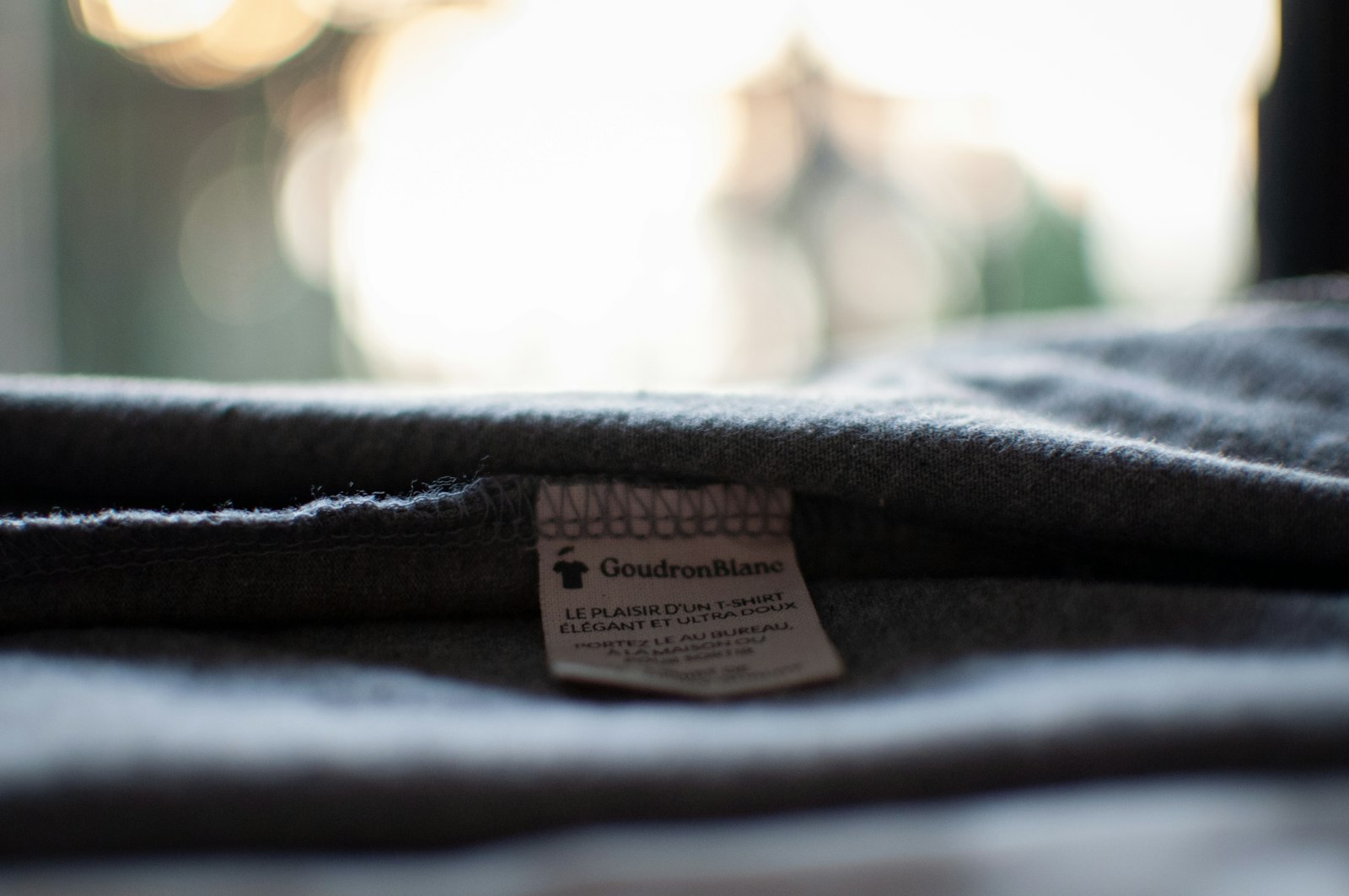


Go and look at the swing tag on the last thing you bought. Maybe it said conscious. Maybe responsible. Maybe it simply showed a little green leaf, the fashion equivalent of a smiley face. In the European Union, a lot of that language became legally risky overnight. On September 27, 2026, the word eco-friendly lost its free pass.
Our video explains Europe’s greenwashing rules in under thirteen minutes. Here is the written version: what the law bans, how fashion got here, what the data says about the fibres in your wardrobe and how to shop once the marketing goes quiet. One note before we start: this is consumer information, not legal advice.
What changed on September 27
The law carries a name only a Brussels committee could love: the directive on empowering consumers for the green transition, Directive (EU) 2024/825. It was adopted in February 2024, member states had until March 2026 to write it into national law and since September 27, 2026 it applies across the EU. Germany and Austria, for example, built it into their unfair competition laws.
Four changes matter most for fashion. First, generic environmental claims such as eco-friendly, green, climate friendly or environmentally friendly are banned unless the company can show recognised excellent environmental performance, for instance through the official EU Ecolabel. Second, homemade sustainability badges are out: labels must rest on an independent certification scheme or be set up by a public authority. Third, the part for the whole trick no longer works. If only the lining is recycled, the jacket cannot be advertised as if the whole thing were. Fourth, a product can no longer be called climate neutral just because the company bought carbon credits somewhere else, and promises like net zero by 2040 now need a clear, public plan behind them.
In Germany, enforcement comes mainly from competitors and consumer associations through formal warnings and court injunctions. For large cross-border cases, EU consumer law allows fines of up to 4 percent of annual turnover. The real shift is simple: the burden of proof has moved from the shopper to the seller.
How fashion got here
Why does Europe need a law against a word? Because the word stopped meaning anything. When the European Commission examined environmental claims in 2020, it found that 53 percent were vague, misleading or unfounded and 40 percent could not be backed up at all. It also counted at least 230 sustainability labels on the market. Nobody can memorise 230 logos, not even the most dedicated Vinted power user.
Fashion had been warned for years. In 2022 Norway’s consumer authority challenged H&M and the outdoor brand Norrøna over claims based on the Higg Index, a widely used industry scoring tool, after which the coalition behind Higg paused the consumer facing version. In 2024, after an EU-wide dialogue, Zalando agreed to change the sustainability icons on its platform because authorities said they could mislead shoppers.
Why fashion in particular? A garment passes through many hands: farm, spinner, mill, dye house, sewing factory, warehouse. Most brands own none of those steps and many cannot see past the first one or two. That makes precise claims hard and vague claims tempting. And clothes are emotional purchases. You do not buy a dress the way you buy a washing machine, and a small green signal at the right moment can tip the decision. This was rarely about outright lies. It was about language doing far too much work.
Early results suggest the law is working. A peer reviewed study published in September in the journal Sustainability tracked 714 products on Amazon in Germany, France, Italy and the UK across 36 checks in the first half of 2026. In the EU countries, generic green claims on uncertified products fell by almost nine percentage points compared with the UK, where the rules do not apply. Sellers did not go silent. They switched to more specific, evidence based claims, which the researchers call signal upgrading. Less eco, more here is the certificate.
What is really in your clothes
Under the label sits the material, and the data is sobering. According to Textile Exchange’s Materials Market Report 2026, the world produced about 139 million tonnes of fibre in 2025, roughly 17 kilos per person. Polyester made up 59 percent and almost nine in ten tonnes of that polyester was virgin, made from fossil fuels.
What about recycled polyester? Around 97 percent of it comes from plastic bottles and other non textile sources, not from old clothes. A bottle turned into a T-shirt leaves the bottle loop and is very hard to recycle again. True textile to textile recycling remains around 1 percent of all fibre. So made with recycled materials can be true and still say very little about whether fashion’s waste mountain is shrinking.
Then there is land. In September, researchers at the University of Oxford’s Smith School estimated that the fashion industry influences around 30 percent of the world’s farmland, about 1.45 billion hectares. Influence does not mean ownership: once leather and wool are counted, the grazing land behind them counts too, and fashion’s buying decisions can shape how that land is farmed. The Oxford team also found that how a fibre is produced often matters more than which fibre it is. For viscose, emissions varied about forty fold between the cleanest and the dirtiest production. Natural is not automatically good and synthetic is not automatically bad, which is exactly why one word on a tag was never enough.
The other squeeze on cheap fashion
While Europe tightens the rules on claims, it is also tightening the economics of ultra cheap fashion. At the end of September Shein published its first results since listing in Hong Kong: second quarter revenue rose less than 1 percent to about $11.1 billion, adjusted profit fell by two thirds to $228 million and revenue in Europe dropped about 14 percent. Shein pointed to higher freight and fuel costs and the end of duty free treatment for small parcels in the US and Europe. The shares fell to a record low.
The background: parcels worth less than €150 used to enter the EU without customs duty. Since July 2026 the EU charges a flat €3 duty per type of item on low value parcels from outside the EU, a temporary measure that runs until 2028. On top of that comes a separate handling charge, as we explained in our piece on the new €2 parcel fee from November 1. France went further with its ultra fast fashion law, which adds per item penalties rising every year until 2030 and bans advertising for these products, including through influencers, from January 2027.
Who wins? European retailers and mid price brands get some breathing room. Who loses? Ultra cheap platforms lose part of their price advantage, but shoppers on tight budgets lose the most, because €3 weighs far more on a €6 top than on a €100 jacket. Anyone selling these rules as a pure win is leaving that part out.
How to shop when the label goes quiet
Our practical guide, which is our view and not a legal checklist. Look for specifics instead of adjectives: 70 percent recycled polyester from post consumer bottles tells you something, planet positive tells you nothing. If a claim has a number, a material and a source, take it seriously. If it only has a mood, ignore it. Trust labels with someone checking behind them, such as the EU Ecolabel, Germany’s Blauer Engel, the state run Grüner Knopf or GOTS for organic textiles. And remember that the most sustainable garment is still the one you wear the longest.
On a small budget, buy second hand, repair and choose single fibre basics, which are easier to recycle later. In the middle range, buy fewer certified pieces and check seams, fabric weight and repair services. At the top end, price is no guarantee: ask for supply chain data and expect an answer. And if a brand suddenly stops talking about sustainability, a trend called greenhushing, it may simply be checking its claims. Silence is not a certificate either.
The end of the green feeling
For about fifteen years fashion sold sustainability like a mood: a colour, a leaf, a calm word on a tag. Europe has now said that feeling is not enough. The law will not fix fashion on its own, because the industry still produces more fibre every year and recycling trails far behind the marketing. But claims are where shoppers and brands meet, and if those claims have to be true, every sales conversation gets more honest. Our prediction, clearly labelled as one: the brands that win on sustainability will not have the greenest tags. They will have the most boring, specific and checkable sentences. Boring might just be the new green.
Key facts at a glance
- Law: Directive (EU) 2024/825 on empowering consumers for the green transition applies across the EU since September 27, 2026.
- Bans: Generic claims like eco-friendly without proof, self made sustainability labels, whole product claims that only apply to a part and climate neutral claims based only on offsets.
- Fibre data: 139 million tonnes of fibre were produced in 2025, 59 percent of it polyester, and around 97 percent of recycled polyester comes from non textile sources such as bottles.
- Land: Oxford researchers estimate fashion influences about 30 percent of global farmland, roughly 1.45 billion hectares.
- Parcels: Since July 2026 the EU charges a flat €3 customs duty per item type on low value parcels from outside the EU.
FAQ
Is the word eco-friendly banned in the EU?
Since September 27, 2026, generic claims such as eco-friendly or green are banned on products in the EU unless the company can prove recognised excellent environmental performance, for example through the EU Ecolabel.
Is recycled polyester made from old clothes?
Mostly not. According to Textile Exchange, around 97 percent of recycled polyester comes from plastic bottles and other non textile sources, and textile to textile recycling is about 1 percent of all fibre.
Which clothing labels can I trust?
Labels with published criteria and independent checks, such as the EU Ecolabel, Blauer Engel, Grüner Knopf and GOTS, are more reliable than self designed badges with leaves or globes.
Sources
- Directive (EU) 2024/825 Empowering Consumers for the Green Transition (European Commission)
- EmpCo-Richtlinie (lawcode.eu)
- EmpCo und Greenwashing (Brandauer Rechtsanwälte)
- Consumer protection: enabling sustainable choices and ending greenwashing (European Commission)
- H&M, Norrøna and the Higg Index in Norway (Business of Fashion)
- Zalando agrees with EU to halt its misleading green claims (Bloomberg)
- Sağlam and Aygören, Sustainability 18(17), 9033 (MDPI)
- Materials Market Report 2026 (Textile Exchange)
- Textile Exchange tracks the global fibre shift (Wool News)
- Almost a third of the world’s farmland influenced by fashion industry (University of Oxford, Smith School)
- Shein drops to record low after profit misses (South China Morning Post)
- €3 customs duty on low value parcels (European Commission)
- France anti fast fashion law 2026 explained (Fashion Law Journal)
- Eco-Friendly Is Over: Europe’s Greenwashing Ban Explained (FASHIONY MAGAZINE on YouTube)