
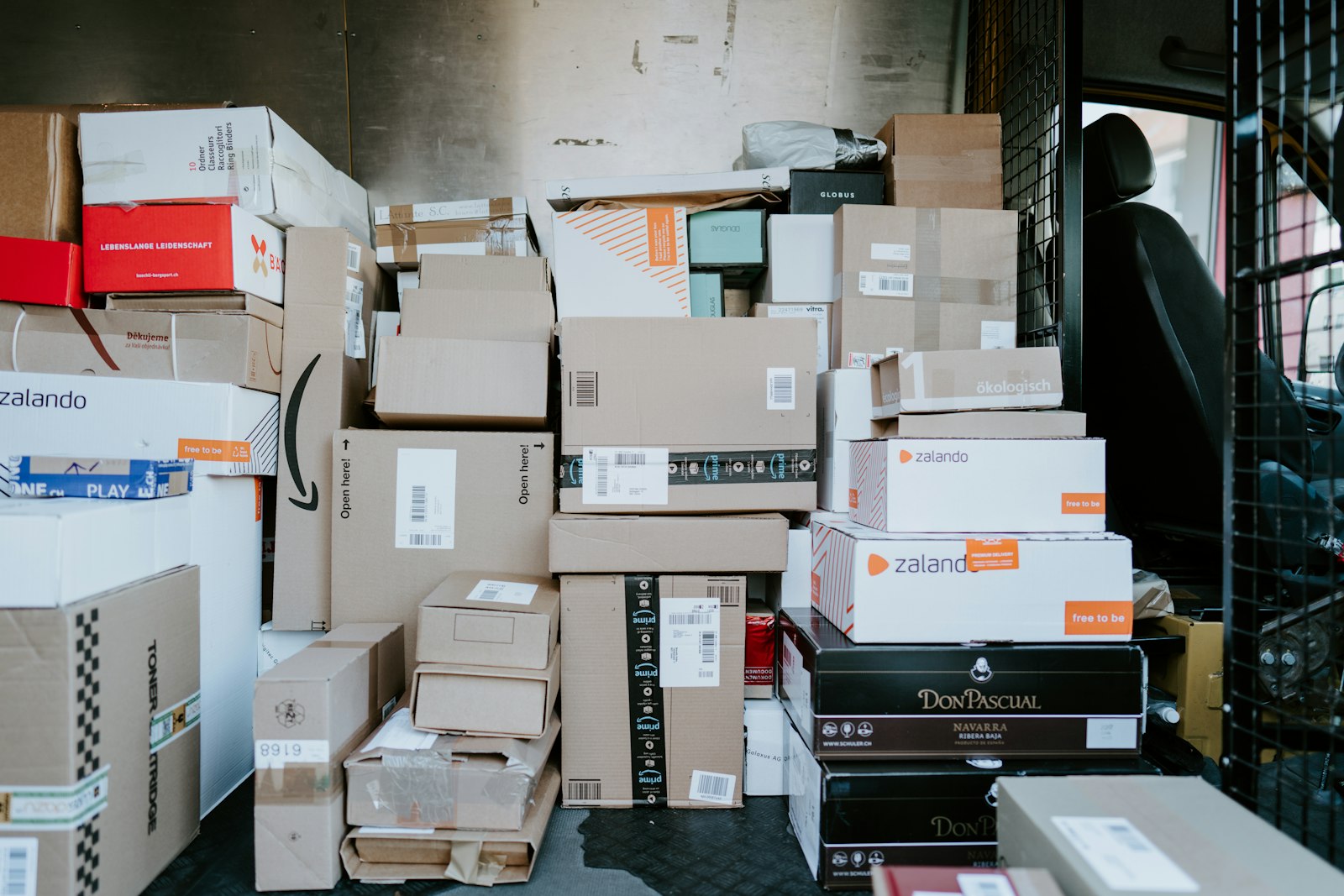


Somewhere in a logistics hub outside Liège or Leipzig, a parcel the size of a paperback is waiting. Inside: a cropped cardigan, two phone cases and a hair clip shaped like a croissant. Total value, about the price of a cinema ticket. From 1 November, that little parcel becomes the subject of European fiscal policy, because the EU is introducing a new €2 handling fee on small parcels shipped from outside the bloc directly to consumers.
If you have ever filled a cart on Temu, Shein or AliExpress at midnight with the focus of Rebecca Bloomwood in Confessions of a Shopaholic, this one is about you. Not as a scolding, we promise. More as a receipt.
What exactly changes on 1 November
The new EU parcel fee is a flat €2 handling charge that applies to goods sent from non-EU countries straight to EU customers. According to reporting by FashionUnited and The Brussels Times, it is calculated per product type in a parcel rather than per individual piece. Ten identical T-shirts would therefore trigger one €2 fee. Five pairs of trousers plus five T-shirts would trigger two, so €4. The value of the parcel does not matter and the fee is designed to be permanent, with the amount reviewed every two years.
It comes on top of something many shoppers barely noticed: since 1 July 2026, a flat €3 customs duty has applied to low-value parcels under €150, a temporary measure that ends in 2028. From 1 July 2028, regular product-specific customs duties are set to take over. The tax-free status that cheap imports enjoyed for years is being dismantled in stages. November is the next stage.
The legal basis is the reform of the Union Customs Code. Parliament and Council negotiators reached a provisional deal in March 2026 and the Council adopted the revision in September. Its text required member states to start collecting a handling fee no later than 1 November 2026, with the Commission setting the amount.
Who pays, at least on paper
Here is the elegant part of the policy, at least on paper. The European Parliament’s summary states that the fee is paid by whoever pays the other customs charges on the parcel, so that consumers do not bear the cost directly. In practice that means platforms, sellers and intermediaries. Nothing, however, stops a platform from nudging its prices upward to recover the money. The EU cannot regulate a price tag into staying still.
Consumer groups are watching for a different trick. The Brussels Times reports that agencies worry some platforms could add the charge late in checkout, the digital version of a restaurant “service supplement” you only discover on the bill. That would clash with EU rules requiring full prices to be shown upfront. If you see a mysterious €2 or €4 materialise one click before payment, you are entitled to raise an eyebrow.
Why Brussels is doing this now
The short answer is volume. Rapporteur Dirk Gotink said 5.8 billion low-value parcels entered the EU in a single year, with the number having nearly doubled by 2024. More than 90 percent of the cheap ones come from China, according to the figures reported by both outlets. Customs authorities were never designed to inspect a flood of tiny envelopes, each one a separate declaration. The handling fee is meant to fund those checks.
Safety is the second motive. BEUC, the European consumer organisation, has reported that 69 percent of tested products imported via Temu and Shein did not comply with EU safety rules. Its director general Agustín Reyna said the fee shows policymakers “have finally recognised that safe borders require adequate resources”. Gotink was blunter when the deal was struck, saying the goal was an internal market “that no longer leaves platforms such as Temu, SHEIN and AliExpress untouched”.
And there is a third motive nobody in Brussels likes to put in a press release: competition. European retailers, from high street chains to small labels, have spent years complaining that they pay duties, VAT and compliance costs while direct shippers slipped through the gap. Closing that gap is, depending on whom you ask, either fairness or protectionism with good manners.
Is it working already?
Early numbers suggest the €3 duty has changed behaviour. Both FashionUnited and The Brussels Times report that imports of small parcels fell by about 64 percent after July. Officials caution that it is too early to draw firm conclusions. Some of that drop may reflect platforms shifting stock into European warehouses, which the customs reform actively encourages with a lower fee for bulk shipments. Your parcel may simply start its journey in Poland instead of Guangzhou. Whether that counts as a victory depends on whether you care about the border or the business model.
What it means for your wardrobe
Two euros will not end ultra-fast fashion. Nobody sensible believes that. A €6 dress that becomes an €8 dress is still a €6 dress in spirit. What the fee does is make the economics of buying single, cheap items from overseas slightly less magical. The famous “free” in free shipping was always paid by someone, often by customs services and by the environment.
Fashion has seen this film before. Miranda Priestly’s cerulean monologue in The Devil Wears Prada traced a colour from the runway to a clearance bin. Today the bin is an app and the trickle-down travels by air freight. What Brussels is doing is adding a small toll booth on that road.
If you want a practical takeaway: check whether a platform shows the final price including all charges before you pay and compare it with what a European retailer charges for something similar. Then ask yourself whether the croissant hair clip is a want or a reflex. We are not your mother. We are, however, a magazine that has just spent more than a thousand words on a two euro fee, which should tell you how much small numbers can matter.
The bigger picture
The handling fee is one piece of a larger overhaul. A new EU Customs Authority based in Lille is being set up, a central customs data hub is planned and platforms selling directly into the EU will be treated as importers, with fines of up to 6 percent of the value of goods imported in the previous year for repeat offenders. The era in which a parcel could arrive with almost no paperwork is closing. What replaces it will shape not only prices but which kinds of fashion businesses can thrive in Europe. Our guess, clearly labelled as a guess: the next battleground is not the parcel but the warehouse.
Key facts at a glance
- What: The EU introduces a €2 handling fee on small parcels sent from non-EU countries directly to EU consumers.
- When: The fee applies from 1 November 2026 and is permanent, with the amount reviewed every two years.
- How it is counted: The fee is charged per product type in a parcel regardless of the parcel’s value, so ten identical T-shirts cost €2 while trousers plus T-shirts cost €4.
- Existing duty: Since 1 July 2026 a temporary €3 customs duty has applied to parcels under €150 until regular product duties start on 1 July 2028.
- Who pays: Platforms, sellers or intermediaries owe the fee, although they may pass it on through higher prices.
FAQ
How much is the new EU parcel fee on Temu and Shein orders?
The handling fee is €2 per product type in a parcel shipped from outside the EU. It comes on top of the temporary €3 customs duty on parcels worth less than €150.
When does the EU €2 handling fee start?
The fee applies from 1 November 2026. It is designed as a permanent charge that the European Commission reviews every two years.
Do consumers have to pay the EU parcel handling fee?
Officially the fee is paid by the platform or seller, not by the consumer. Platforms can still raise prices to recover the cost, but EU rules require the full price to be shown upfront.
Sources
- New EU package fee: online retailers face levy on non-EU imports (FashionUnited)
- EU to introduce handling fee on small parcels coming into the bloc (The Brussels Times)
- Deal reached on Union Customs Code reform (European Parliament)
- EU Council gives the green light to customs reform (Eunews)
- EU countries agree temporary €3 flat customs fee for small imported parcels (Euronews)