

The CFDA’s Fashion Icon award has a certain pedigree. Rihanna received it in 2014, the year she wore that crystal-covered sheer gown. Beyoncé took it home in 2016. So when the Council of Fashion Designers of America announced its 2026 Fashion Icon on 27 October, you might have expected another pop star with a stylist and a staircase entrance. Instead the honour goes to a 77-year-old architect, not a couturier, who has arguably shaped more of your luxury shopping experience than most designers alive: Peter Marino.
If you have ever walked into a Chanel, Dior or Louis Vuitton flagship and felt your voice drop to a whisper, as if you had wandered into a chapel that sells handbags, there is a good chance you were standing in one of his rooms.
The man behind the shop window
According to WWD, which broke the news, the CFDA is honouring Marino as a figure who works across architecture, art and fashion and who reshaped the luxury retail experience. The list of clients credited to him reads like the index of a fashion history book: Armani, Bulgari, Chanel, Dior, Louis Vuitton, Tiffany & Co. and Zegna. Earlier in his career he designed boutiques for Donna Karan, Calvin Klein and Barneys New York. His recent work includes Dior flagships in Milan, Beverly Hills and New York, Chanel buildings in San Diego and Los Angeles plus Tiffany flagships in Milan and New York.
Marino, born in New York in 1949 and trained at Cornell, founded his firm in 1978. His early commissions came from the orbit of Andy Warhol, which feels almost too neat for a man who would later turn shops into something between gallery and theatre. The Barneys project of the mid-1980s opened the door to the fashion world and he never left the room.
He will receive the award at the CFDA Fashion Awards on 2 November at the American Museum of Natural History in New York, presented by actor and animal rights advocate Cornelia Guest. Thom Browne, chairman of the CFDA, said Marino had “transformed architecture into an expression of fashion”. Marino himself said it was a pleasure to be recognised by an industry he has worked in for the past 40 years.
Why an architect is a fashion icon
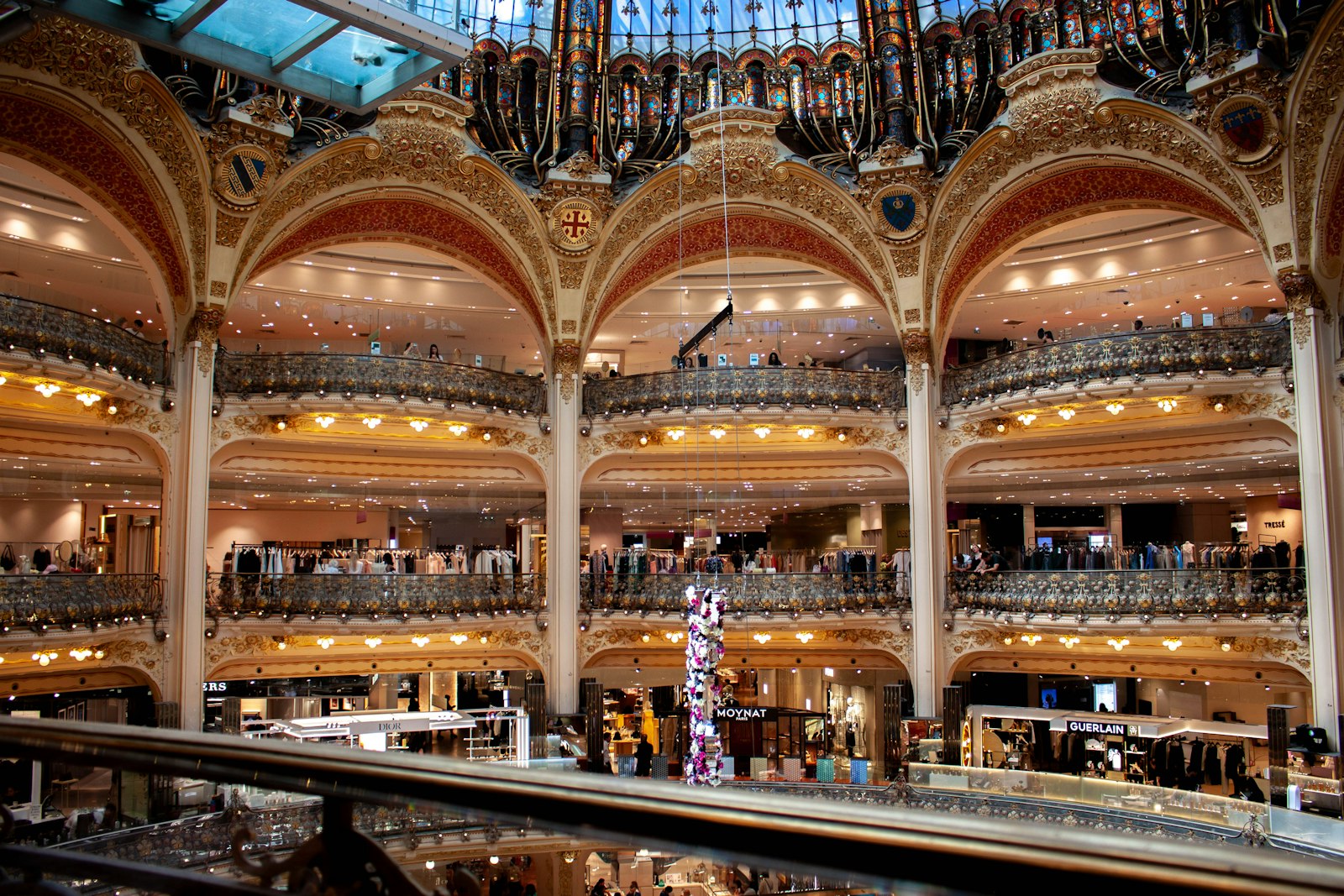
Here is the slightly uncomfortable truth for anyone who still thinks fashion lives on the runway: most of the time it lives in a building. A runway show lasts about fifteen minutes. A flagship store stands for decades and tells you, before a sales associate ever says hello, how much a brand wants you to believe in it. Marble, lacquer, bronze, double-height staircases, a Picasso-adjacent artwork on the landing: none of it is accidental. It is persuasion with load-bearing walls.
Marino understood early that luxury needed theatre more than shelves. His stores are known for site-specific art commissions, so that buying a scarf becomes an event staged among works by contemporary artists. You do not just shop. You are being cast in the brand’s story, briefly, until the card reader beeps.
That is why the award makes sense right now. Luxury is in a strange mood. Several big houses are reporting softer sales (LVMH’s fashion and leather goods division, for example, reported a 5 percent drop in third-quarter sales) and the industry is debating whether its prices outran its magic. In that climate, the physical store has become one of the last places where a brand can fully control the experience. E-commerce flattens everything into the same white grid. A Marino building does the opposite.
The look: Brando, but make it archival
Of course, the CFDA did not just pick him for his floor plans. Marino’s personal style has become a fashion reference of its own: head-to-toe black leather, biker boots, dark sunglasses and a leather cap. Picture Marlon Brando in The Wild One, then imagine him discussing Louis XV commodes and you are close. In a world where many architects dress like they are about to give a TED talk, Marino looks like he might ride off after the ribbon cutting.
There is a lesson in that. It is not only for people who own studded leather. A signature uniform is a form of authorship. Karl Lagerfeld had the high collar and fingerless gloves. Anna Wintour has the bob and the sunglasses. Marino has the leathers. A recognisable silhouette makes you instantly legible in a crowded room, which is exactly what a great flagship store does on a crowded street.
Art, foundations and a very large collection
Beyond the shops, Marino is a serious collector. In 2021 he opened the Peter Marino Art Foundation in Southampton, New York, which according to WWD houses more than 500 works ranging from antiquity to the present. France’s Ministry of Culture made him a Chevalier of the Ordre des Arts et des Lettres in 2012 and an Officier in 2017. In 2024 he received the World Monuments Fund’s Hadrian Award.
This is where the meta question creeps in. We will ask it ourselves before you do: is it odd for a fashion award to go to the man who designs the rooms where fashion is sold? A little. It is also honest. The CFDA’s other honourees this year include photographers Inez van Lamsweerde and Vinoodh Matadin, retail veteran Linda Fargo plus Eva Chen, who receives the Media Award. Fashion increasingly celebrates the people who build its frame, not just the people who cut its cloth.
What to watch on 2 November
The CFDA Fashion Awards, hosted by Keke Palmer, will hand out the designer-of-the-year categories alongside Marino’s award. Expect plenty of red carpet looks, a few speeches that run long and at least one guest dressed in black leather as a tribute. Our prediction, clearly marked as such: the most photographed outfit of the night may belong to an honouree who designs buildings, not clothes.
Whatever you think of luxury’s price tags, Marino’s recognition says something useful about where fashion’s power sits in 2026. It is not only in the collection. It is in the door you walk through, the light you stand under and the story the walls tell you before anyone opens a box. The next time a shop makes you feel underdressed, you will know whom to thank.
Key facts at a glance
- What: The CFDA named architect Peter Marino its 2026 Fashion Icon on 27 October 2026.
- When: Marino receives the award at the CFDA Fashion Awards on 2 November 2026 at the American Museum of Natural History in New York.
- Who: Marino founded his New York design firm in 1978 and has designed stores for Chanel, Dior, Louis Vuitton, Armani, Bulgari, Tiffany & Co. and Zegna.
- Presenter: Actor and animal rights advocate Cornelia Guest presents the award.
- Art: His Peter Marino Art Foundation in Southampton, New York, opened in 2021 and houses more than 500 works.
FAQ
Who is the CFDA Fashion Icon 2026?
The CFDA Fashion Icon 2026 is the American architect Peter Marino. He is honoured for reshaping the luxury retail experience through stores for brands such as Chanel, Dior and Louis Vuitton.
When are the CFDA Fashion Awards 2026?
The CFDA Fashion Awards take place on 2 November 2026 at the American Museum of Natural History in New York. Keke Palmer hosts the ceremony.
Why is Peter Marino known for black leather?
Peter Marino has long dressed in head-to-toe black leather with biker boots, dark sunglasses and a leather cap. The look has become his personal signature in the design world.
Sources
- Peter Marino Selected CFDA’s 2026 Fashion Icon (WWD)
- Peter Marino to Be CFDA’s 2026 Fashion Icon (WWD via Yahoo)
- CFDA Announces 2026 Fashion Awards Nominees and Honorees (The Impression)
- LVMH Group Q3 2026 Earnings: Fashion Unit Sales Fall 5 Percent (WWD)
- Peter Marino (Wikipedia)
- Introducing the 2014 CFDA Fashion Icon of the Year (CFDA)