
Three years. That is roughly the shelf life of a cashmere scarf you actually wear, a mid-range smartphone or, it now turns out, a creative director at McQueen. On Thursday, October 15, Kering confirmed that Seán McGirr leaves McQueen after three years of trying to convince the world that the house Lee Alexander McQueen built on bone-sharp tailoring and controlled chaos could be both thrilling and profitable again. The answer from the spreadsheets was apparently no.
You could read this as one more name in fashion’s endless game of musical chairs. You would not be entirely wrong. But the McGirr exit tells you something more specific about where luxury is in late 2026: a business that spent the boom years selling chunky sneakers and logo hoodies is now asking its designers to fix revenue problems that are only partly about design.
What happened at McQueen
McGirr, who is Irish and 38, was appointed in October 2023. He succeeded Sarah Burton, who had spent 26 years at the house, 13 of them as creative director. Burton is also the woman who designed the Duchess of Cambridge’s wedding dress in 2011, which is the kind of legacy that makes any successor’s first fitting slightly nerve-racking. Before McQueen, McGirr was head of ready-to-wear at JW Anderson. His CV also includes stints at Dries Van Noten, Uniqlo and Burberry.
Kering CEO Luca de Meo thanked him for his “contribution and dedication” and said the ambition is “a bold new direction for the house.” McQueen’s president and CEO Gianfranco D’Attis credited McGirr with reconnecting the label to London’s creative community. McGirr himself said he was proud of his team’s progressive energy. No successor has been named. The house says it will announce new creative leadership soon and that the next designer will debut in London.
Three shows, three moods
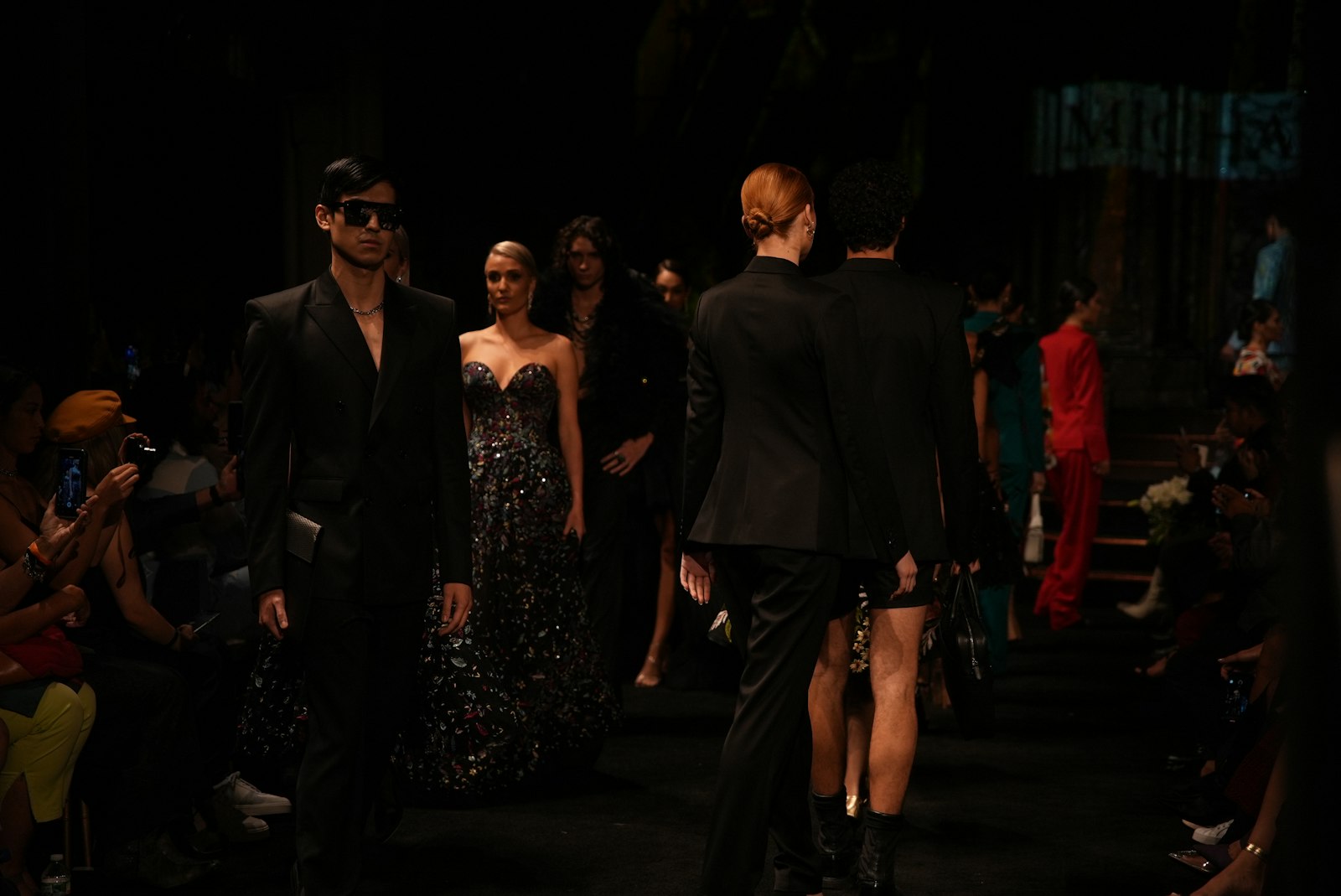
McGirr’s debut took place in a warehouse on the outskirts of Paris, a setting Vogue linked to the London venue where Lee McQueen once staged The Birds. The clothes were big on exaggerated knitwear and shearling. Reviews were mixed, which in fashion is a polite word for “people had feelings on the group chat.”
His second outing at the École des Beaux-Arts was calmer. Vogue Runway’s Nicole Phelps called it “more cohesive and more commercially viable,” which reads like a compliment until you realise that commercial viability is exactly what the parent company was waiting for. The final collection, Spring Summer 2027, moved the show back home to the undercroft of Lincoln’s Inn Chapel in London. It brought sculptural shoulders that suggested folded angel wings plus sharp silhouettes that at least looked like someone had been to the archive.
That archive is the problem and the asset. McQueen is the house of Highland Rape, of Kate Moss as a hologram and of the Met’s 2011 blockbuster Savage Beauty. Any designer stepping in is competing with a ghost whose shows are still studied like film history. Taste is subjective. The numbers are not.
The numbers behind the exit
Kering does not publish sales for its individual houses apart from Gucci, so every figure here is an estimate. Analysts at Bernstein put McQueen’s 2025 revenue below 200 million euros. At its post-pandemic peak the brand was bringing in far more: AFP cites Bernstein at about 800 million euros, while Vogue reports a peak of 850 million euros in 2022 and 2023. Either way you look at it, the business has shrunk to roughly a quarter of its former size.
Bernstein analyst Luca Solca told AFP that McQueen had leaned on streetwear and sneakers for growth, categories that have since fallen out of favour. If you owned the oversized white McQueen sneaker around 2018, congratulations: you were part of the growth story that later turned into the problem.
The cuts are already visible. McQueen closed 20 stores in the first half of 2026, according to de Meo’s half-year earnings call. Kering’s plan, presented at its Capital Markets Day in April, calls for the store network to be cut by about half by the end of 2026 compared with the end of 2025. AFP also reports that de Meo initially explored selling the label before choosing to restructure it.
Kering’s spring cleaning
De Meo arrived at Kering in September 2025 from Renault, where he had built a reputation as a turnaround specialist. The McGirr news follows the exit of Anthony Vaccarello from Saint Laurent just days earlier, after a decade at the top. AFP also mentions persistent rumours that Pierpaolo Piccioli could leave Balenciaga less than 18 months after his appointment. That is a rumour, not a fact. Kering has not confirmed anything of the sort.
The context is not exactly cheerful. Kering shares are down 28 percent since the start of 2026, according to AFP. Rival LVMH reported a 5 percent drop in sales at its fashion labels in the third quarter. Demand from China has cooled. Gucci under Demna is the group’s one cautiously positive storyline. In other words, if you are a Kering creative director right now, your mood board probably includes a Bloomberg terminal.
What a creative director is really hired to do
Here is the interpretive part, so read it as analysis rather than gospel. The McGirr case shows how much the job description has changed. In Lee McQueen’s era, the designer’s task was to provoke. Today a creative director at a mid-sized luxury brand is also expected to reverse a sales slump, justify a smaller store network, generate social media moments and keep the archive fans happy. Solca put it neatly when he said there is “a lot on creative directors’ shoulders these days.”
That is a lot of weight for a pair of folded angel wings. It also raises a fair question for you as a reader and possible customer: when a brand shrinks by three quarters, is that one designer’s failure or the hangover of a hype cycle that was never sustainable? Probably a bit of both. The sneaker boom flattered numbers that the clothes alone never had to carry.
What comes next
The next appointment will tell you which version of McQueen Kering wants. A big-name designer would signal another bet on spectacle. A quieter, product-focused hire would suggest the house is being trimmed into a smaller, more exclusive label with fewer stores and fewer sneakers. Kering has promised a debut in London, which at least keeps the house tied to the city where Lee McQueen started out. Whoever gets the keys inherits a magnificent archive, a reduced shop network and a parent company in a hurry. Savage beauty, indeed.
Key facts at a glance
- What: Kering confirmed on October 15, 2026, that Seán McGirr is leaving his role as creative director of McQueen after three years.
- Who: McGirr, 38, joined in October 2023 from JW Anderson and succeeded Sarah Burton, who spent 26 years at the house.
- Numbers: Bernstein estimates McQueen’s 2025 revenue at below 200 million euros, down from a peak of roughly 800 to 850 million euros.
- Restructuring: McQueen closed 20 stores in the first half of 2026 and Kering plans to halve the store network by the end of 2026.
- Status: No successor has been named yet; the house says the next creative director will debut in London.
FAQ
Why is Seán McGirr leaving McQueen?
Kering has not given a detailed reason, but his exit follows a steep decline in sales, mixed reviews and a cost-cutting plan under CEO Luca de Meo. Analysts also point to the fading demand for streetwear and sneakers that once drove McQueen’s growth.
Who will replace Seán McGirr at McQueen?
No successor has been announced. McQueen says it will reveal its new creative leadership soon and that the new designer will make their debut in London.
How much revenue does McQueen make?
Kering does not publish McQueen’s sales. Bernstein estimates 2025 revenue at below 200 million euros, compared with a peak of about 800 to 850 million euros after the pandemic.