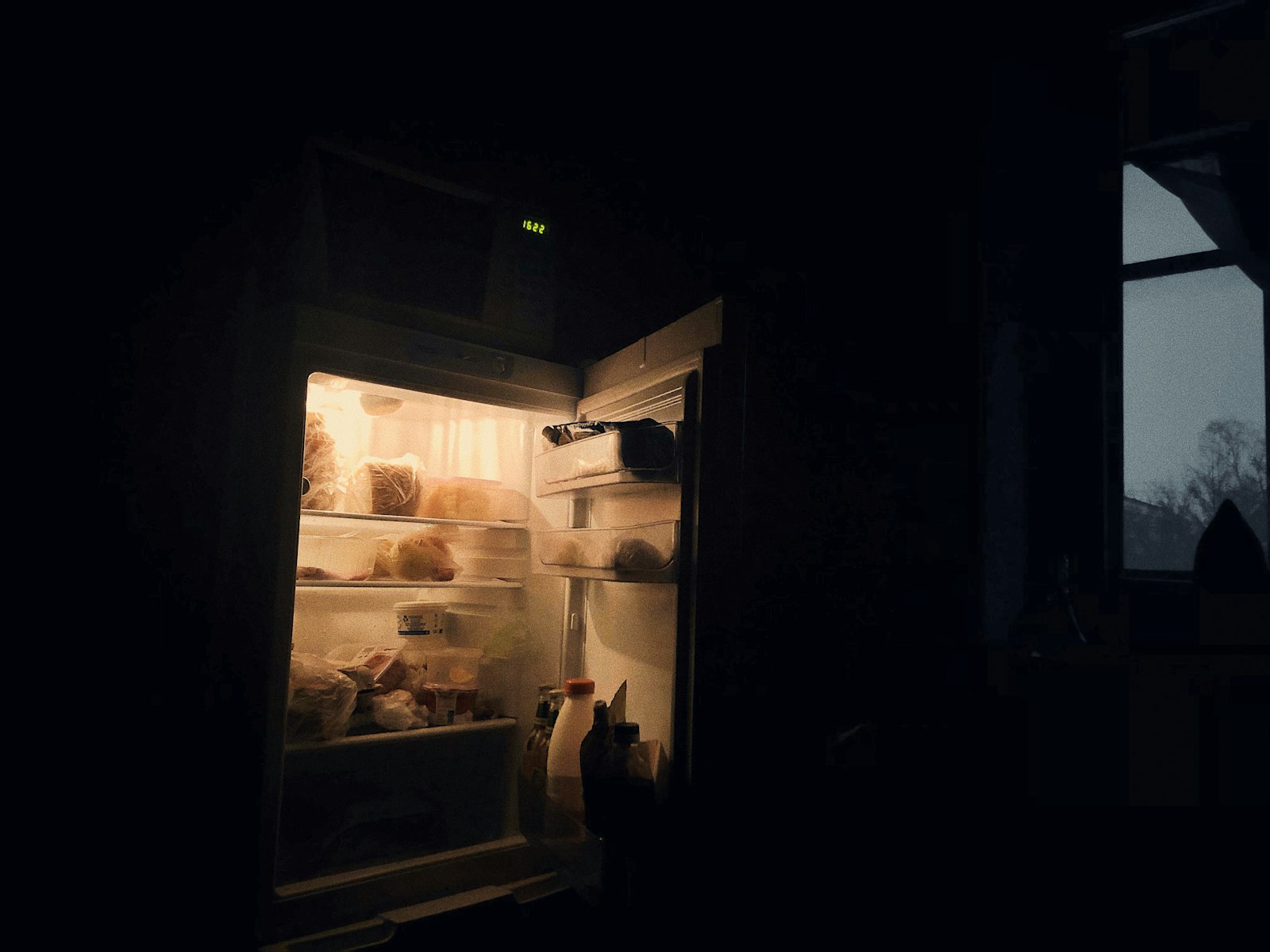


Every household has a rule about the kitchen after dark. In Gremlins it was never to feed them after midnight. In Friends, Joey simply did not share food, at any hour. Your own rule is probably more relaxed: a slice of cheese at 11 p.m., a spoonful of ice cream while the next episode loads, a sandwich assembled by the light of the open fridge. A new study suggests that your liver may have opinions about this habit.
Researchers at Oregon Health & Science University (OHSU) and Massachusetts General Hospital have linked regular late-night eating with a higher risk of fatty liver disease and cirrhosis. The findings were published in the journal Clinical Gastroenterology and Hepatology and publicised by OHSU this week. Before you padlock the refrigerator, though, it is worth looking at what the data can and cannot tell you.
What the late-night eating study found
The team, led by OHSU hepatologist Robert M. Wilechansky, analysed data from nearly 200,000 participants in three large long-running US cohorts: the Nurses’ Health Study, the Nurses’ Health Study II and the Health Professionals Follow-up Study. Participants reported their eating habits, routines and other lifestyle factors over many years. According to the Lund Report, the median follow-up was 16 years.
People who said they regularly ate late at night, after dinner or around bedtime, had a 20 to 30 percent higher rate of non-alcohol-related liver disease than people who did not. That included MASLD (metabolic dysfunction-associated steatotic liver disease, the newer name for what used to be called non-alcoholic fatty liver disease) as well as cirrhosis, the scarring that can follow years of liver damage. The association held after the researchers adjusted for diet, smoking, alcohol use and exercise.
Wilechansky described the work as among the first long-term analyses to explicitly connect late-night eating with fatty liver disease. He also framed it modestly. “We are looking at an association as essentially a launch point for future work,” he told the Lund Report.
Why the clock might matter to your liver
The proposed explanation comes from chronobiology, the study of the body’s internal clocks. The liver runs on circadian rhythms, roughly 24-hour cycles that regulate how it processes nutrients, manages blood sugar and stores energy. When you eat while your body is preparing for sleep, the theory goes, you are asking the night shift to do the work of the day shift.
The researchers point to earlier studies of night-shift workers as well as animal experiments, which suggest the liver is especially sensitive to disrupted eating and sleep timing. Co-author Andrew McHill of OHSU summed up the idea in one line quoted by ScienceDaily: “the timing of behaviors, whether it’s sleep, eating, or exercise, really matters.”
It is a plausible mechanism. It is not yet a proven one. The study did not measure what happened inside anyone’s liver at midnight.
What this study cannot tell you
This is the part that rarely survives the journey from journal to headline, so let’s give it room. The analysis is observational, which means it shows an association rather than cause and effect. People who snack late may differ from early eaters in ways that are hard to capture with questionnaires: sleep quality, stress, work schedules or what exactly ends up on the plate at 11 p.m.
The data were self-reported. The descriptions of meal timing were broad. The cohorts were also not a mirror of the general population. As the Lund Report notes, participants were predominantly white, well-educated Americans with lower rates of metabolic conditions than average. Whether the same pattern holds for younger people, night-shift workers or other populations remains open. Most importantly, the study did not test whether moving your meals earlier actually protects your liver.
Context helps, too. Fatty liver disease is common: estimates cited by the researchers put it at up to 30 percent of the US population. Many people do not know they have it. Only a small fraction of those affected go on to develop serious forms such as cirrhosis. A 20 to 30 percent relative increase in risk is meaningful at a population level, but it does not mean that one midnight snack sets your liver on a path to disaster.
What the researchers suggest and what comes next
The advice from the study team is notably low drama. Wilechansky suggested avoiding a large meal right before bed and said that changing when you eat, not necessarily what you eat, could be one lever for liver health. He also pointed out that liver disease can be reversed if it is caught early. That is a good reason to talk to your doctor about liver values if you have risk factors such as excess weight or type 2 diabetes, rather than reorganising your life around a single study.
The next step is already under way. OHSU is recruiting people with fatty liver disease for a follow-up study that will track meal timing directly and use liver imaging to see whether eating earlier produces measurable improvements. That trial, not this one, could turn a promising association into practical guidance.
Until then, the midnight feast keeps its place in literature, from Enid Blyton’s boarding schools to every teen movie sleepover. The science simply asks you to treat it as what the books always said it was: an occasional adventure, not a nightly routine. Your liver, which works without complaint around the clock, might appreciate a proper closing time.
This article is for general information only and does not replace advice from a doctor or other qualified health professional.
Key facts at a glance
- What: A study in Clinical Gastroenterology and Hepatology links regular late-night eating with a 20 to 30 percent higher rate of fatty liver disease (MASLD) and cirrhosis.
- Who: The research was led by hepatologist Robert M. Wilechansky at Oregon Health & Science University with Massachusetts General Hospital.
- Data: The analysis covers nearly 200,000 participants from three US cohorts with a median follow-up of 16 years.
- Limits: The study is observational and based on self-reported data, so it shows an association rather than proof that late-night eating causes liver disease.
- Note: for general information only, not medical advice.
FAQ
Is late-night eating bad for your liver?
A new study of nearly 200,000 people found that regular late-night eaters had a 20 to 30 percent higher rate of fatty liver disease and cirrhosis. The study shows an association and does not prove that late-night eating causes liver disease.
Why could late-night eating affect liver health?
Researchers suspect that eating while the body prepares for sleep disrupts the circadian rhythms that control how the liver processes nutrients and blood sugar. This mechanism has not been confirmed in humans by the new study.
Should I stop eating late at night?
The lead researcher suggests avoiding a large meal right before bed. A follow-up study at OHSU is testing whether eating earlier measurably improves liver health. Anyone with concerns should speak to a doctor.