
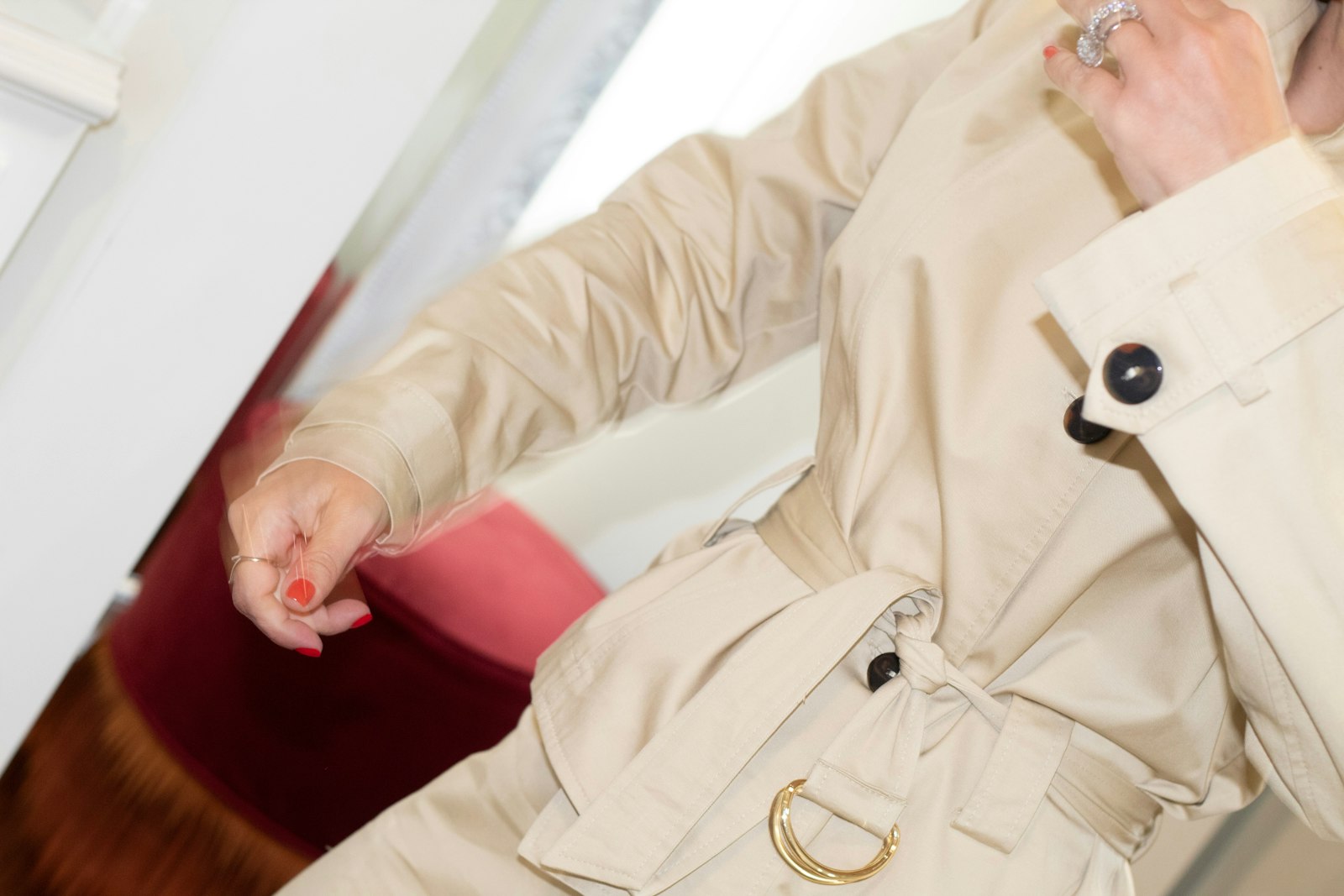


There are two kinds of people who buy Burberry. The first walks into a store, tries on a honey-coloured trench and leaves feeling like Humphrey Bogart at the end of Casablanca. The second does not try anything on at all. He files a notice with the London Stock Exchange instead. On 12 October, Frasers Group, the Mike Ashley-controlled retail empire best known for Sports Direct and its famously oversized souvenir mugs, told the market it now holds an interest in 7.42 percent of Burberry’s voting rights. A week earlier it had been 6.32 percent. Earlier this year it was 4.16 percent.
If you follow fashion mainly through runway shows, this sounds like a story for the business pages. It is also a story about where your favourite heritage brands are going to be sold, by whom and at what price. So grab your umbrella. It is about to get very British.
What Frasers actually bought
The fine print matters here, because Frasers has not marched into a Burberry boutique with a shopping trolley full of shares. According to Reuters, the entire stake is held through sold put options with expiry dates in October 2026, March 2027 and September 2027. In plain English: Frasers has written contracts that can oblige it to buy Burberry shares at an agreed price if the other side decides to sell. Under UK disclosure rules that kind of exposure counts toward a notifiable interest, which is why it appears in filings even before the shares change hands.
That structure is clever and cautious at the same time. It gives Frasers a growing foothold without paying full price upfront, plus it keeps options open in the most literal sense. Burberry declined to comment to Reuters. Frasers did not immediately respond.
The new luxury department of a discount empire
The timing is not random. At the start of October, during Paris Fashion Week, Frasers launched a division called Frasers Group Luxury with an event at the Hôtel de Crillon. The unit bundles the group’s upmarket businesses: the Flannels chain, Harvey Nichols, which Frasers bought out of administration in August, the US concept store The Webster plus stakes in Mulberry, Burberry and Hugo Boss. Frasers chief executive Michael Murray says luxury already brings in more than £1 billion in annual sales across more than 100 stores in the UK and the US.
Read that list again and you see a pattern. Frasers wants to be the shop that sells luxury and the investor that owns a piece of it. Burberry chief executive Joshua Schulman has publicly described Flannels as a “long-standing wholesale partner” that helps the brand reach customers in places without its own stores. So the relationship already exists on the shop floor. The filings simply move it up to the boardroom.
There is a certain comedy in this for anyone who remembers the 2000s, when Burberry check was everywhere from football terraces to tabloid covers and the brand spent years trying to win back its exclusivity. Now one of Britain’s most famous discount retailers is quietly becoming one of its larger shareholders. Fashion history does love a plot twist.
Is Burberry a takeover target?
That is the question Puck put in a headline on 13 October. It is also the one the City keeps asking. Here it helps to separate fact from speculation. Fact: Frasers holds an interest of 7.42 percent through options. Fact: nobody has announced a bid. Under UK takeover rules a shareholder that crosses 30 percent generally has to make an offer for the whole company. Frasers is nowhere near that line.
The interpretation part comes from Frasers’ own track record. With Hugo Boss, the group built a large stake, then launched a cash offer of 38 euros per share this summer. The German company’s boards unanimously called the price “inadequate” and only 7.3 percent of shares were tendered in the initial acceptance period, according to Retail Gazette. Frasers kept buying anyway. FashionNetwork now reports that it owns almost half of Hugo Boss and that Michael Murray chairs the supervisory board. The lesson for Burberry watchers: Frasers is patient, persistent and not easily put off by a polite no.
Whether that playbook will be repeated in Burberry’s case is open. A small stake can just as easily be a strategic bet on a recovery, a seat at the table for wholesale negotiations or a bargaining chip. Anyone who tells you they know which one it is has either inside information or an overactive imagination.
Why the timing looks attractive
Investors tend to buy into turnarounds before they look obvious. Burberry’s numbers have started to cooperate. In its first quarter trading update on 17 July, covering the 13 weeks to 27 June, the company reported retail revenue of £455 million, up 5 percent at reported exchange rates. Comparable retail sales also rose 5 percent after falling 1 percent a year earlier. The Americas grew 12 percent and Greater China 9 percent, while the region covering Europe, the Middle East, India and Africa slipped 3 percent. “Our strategy is working,” Schulman said of his plan, which carries the name Burberry Forward.
That plan has leaned hard on what Burberry does better than almost anyone: outerwear, check and a very specific kind of rain-soaked Britishness. Think less logo explosion, more Audrey Hepburn in a trench at the end of Breakfast at Tiffany’s. A brand that rediscovers its core tends to become more valuable. It also tends to attract people with spreadsheets.
What it means for you
For shoppers, nothing changes tomorrow. Your trench will not suddenly come with a free oversized mug. In the medium term, though, the question is who controls the routes to market. If one group owns the department stores, the multi-brand chains and stakes in the brands themselves, it gains leverage over pricing, placement and which labels get the best spot on the shop floor. That can mean better access for customers outside big cities. It can also mean fewer independent voices in British luxury retail.
For the industry, the move fits a broader shift, at least in our reading. Luxury demand has cooled since its post-pandemic boom, which makes patient investors with deep pockets look for bargains where others see risk. Frasers is betting that a heritage brand on the mend is worth more than the market currently thinks. Burberry, for its part, has every reason to keep its turnaround on track, if only to make sure any future offer comes at a price it can call adequate.
The trench coat was designed to keep out bad weather. Burberry’s board may soon find out whether it also works against persistent shareholders.
Key facts at a glance
- What: Frasers Group raised its interest in Burberry to 7.42 percent of voting rights, disclosed on 12 October 2026.
- How: According to Reuters, the stake is held entirely through sold put options expiring in October 2026, March 2027 and September 2027.
- Timeline: Frasers held 4.16 percent earlier in 2026 and reported 6.32 percent at the turn of September and October 2026.
- Context: Frasers launched a luxury division in October 2026 that includes Flannels, Harvey Nichols and The Webster plus stakes in Mulberry, Burberry and Hugo Boss.
- Status: No takeover offer for Burberry has been announced. Burberry declined to comment to Reuters.
FAQ
How much of Burberry does Frasers Group own?
Frasers Group holds an interest in 7.42 percent of Burberry’s voting rights, held through sold put options rather than shares bought outright.
Is Frasers Group planning a Burberry takeover?
No offer has been announced. Frasers built a large stake in Hugo Boss before bidding for it, which is why analysts ask the question, but its intentions for Burberry are not public.
How is Burberry performing under Joshua Schulman?
In the quarter to 27 June 2026 Burberry’s retail revenue rose 5 percent to 455 million pounds and comparable sales grew 5 percent, led by the Americas and Greater China.
Sources
- Frasers increases Burberry stake again as it expands luxury interests (Reuters via Euronext)
- Frasers boosts Burberry stake again, it’s now above 7% (FashionNetwork)
- Frasers Ups Burberry Stake to 6.32%, Unveils Luxury Division (Yahoo Finance)
- First Quarter Trading Update FY27 (Burberry Group plc)
- Hugo Boss investors snub Frasers’ £1.7bn takeover bid (Retail Gazette)
- Louis Vuitton’s Growing Pains and Is Burberry a Takeover Target? (Puck)