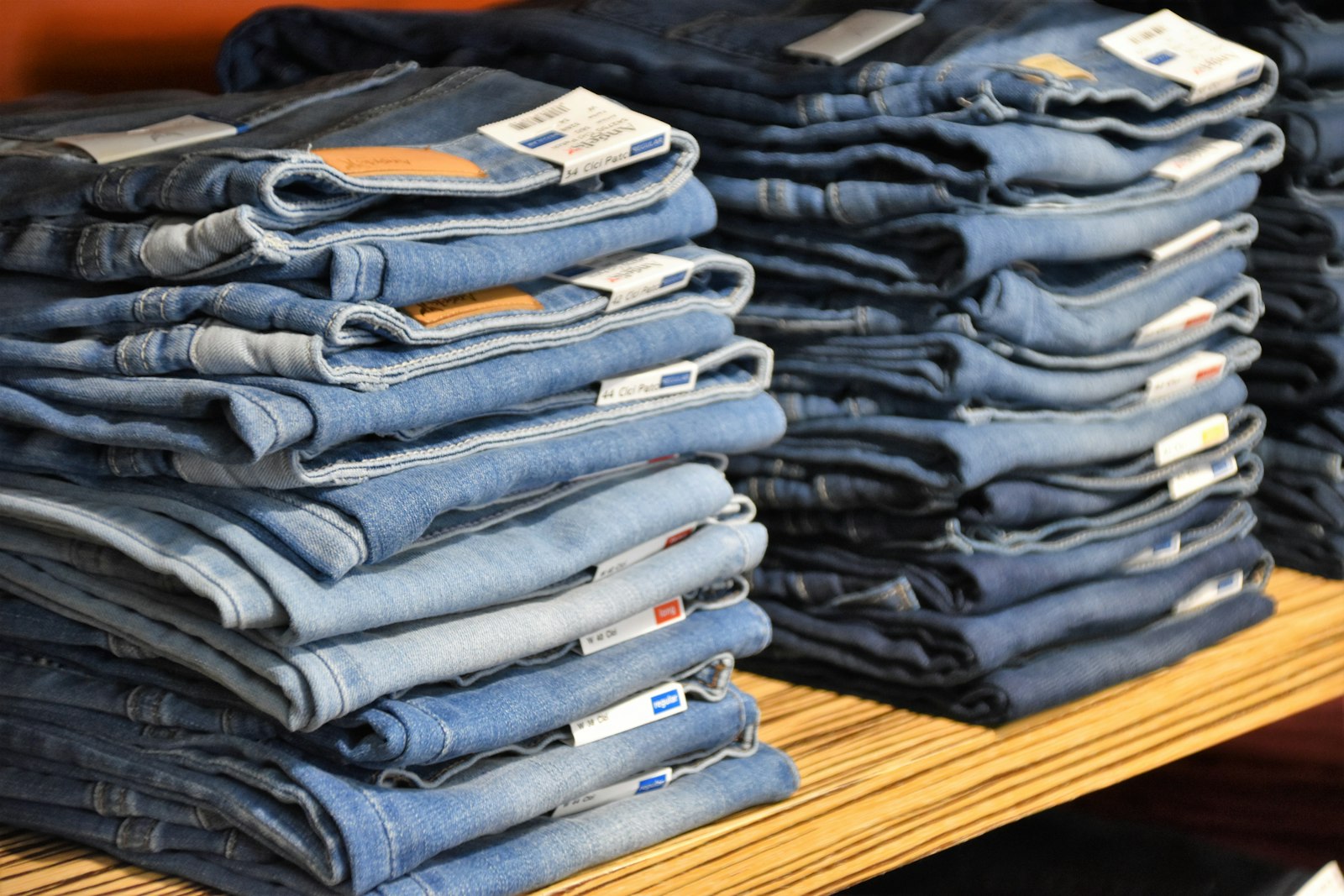

The ink is dry on the end of one of the longest relationships in American denim. Lee, the jeans brand that started life in 1889 as the H.D. Lee Mercantile Company in Salina, Kansas, is no longer owned by a company that makes jeans. It now belongs to Authentic Brands Group, a company that mostly owns names. If that sounds like a philosophical distinction, stay with us. It is about to decide what ends up in your wardrobe.
Authentic announced on November 3, 2026 that it has completed its acquisition of Lee from Kontoor Brands, the denim group that also owns Wrangler. The deal had been signed back in May: Kontoor agreed to sell Lee for 750 million dollars in cash plus an earnout of up to 250 million dollars tied to how the brand performs under its new owner. In other words, up to one billion dollars for a label that most of us associate with a leather patch, a back pocket and possibly a parent’s wardrobe.
What Authentic actually bought
Here is the detail that makes this deal interesting. Authentic did not buy factories, design studios or a warehouse full of indigo. According to its own announcement, it acquired the intellectual property of Lee. The name, the logo, the archive, the stitching signatures, the story. The jeans themselves will now be made by other companies under license.
Authentic has already named its first partners. One Jeanswear Group will handle the United States and Canada. Experience Group takes Europe. HiMaxx covers mainland China plus Hong Kong and Macao, while Union Group is responsible for Mexico. These licensees will develop, source and distribute the product in their markets. Authentic also says more partners are expected to push Lee into activewear, workwear and lifestyle categories.
The numbers explain why Lee was worth the effort. Authentic puts the brand at roughly 1.5 billion dollars in annual retail-equivalent sales across 73 countries, with nearly 40 percent coming from outside the United States and Canada. Authentic itself says it controls more than 50 brands with more than 1,700 licensees and partners, generating over 38 billion dollars in annual systemwide sales in 150 countries. Its portfolio includes names such as Reebok, Champion, Brooks Brothers and Guess.
Why Kontoor let go of half its name
Kontoor Brands was itself born out of a breakup. In 2019, VF Corporation spun off its jeans business, including Lee and Wrangler, into a separate listed company headquartered in Greensboro. VF had owned Lee since 1969. For seven years, Lee and Wrangler sat side by side like two cowboys sharing one saddle.
Kontoor has been clear about why it chose Wrangler. When the sale was announced in May, the company said it wanted to focus on Wrangler and the outdoor label Helly Hansen, which it sees as its stronger growth engines. After closing, chief executive Scott Baxter described the result as a more focused, growth-oriented portfolio built to deliver stronger returns for shareholders. Translated from investor dialect: Lee was a respectable brand, but not the one Wall Street wanted to dance with.
A brand that dressed the working century
It is worth remembering what Lee used to stand for, because that history is precisely the asset Authentic paid for. In 1913 the company introduced the Union-All, a one-piece work jumpsuit that turned practical clothing into a product with a name. By the 1930s and 1940s, Lee had become the leading American maker of work clothes. In 1944, the curved Lazy S stitching became the brand’s official back pocket design, a small signature that still lets denim nerds identify a pair from across a bar.
Lee then followed the same arc as jeans themselves: from the farm and the factory floor into casual wear in the 1950s and then into global pop culture. If you think of American denim as a trinity, Levi’s is the founding myth, Wrangler is the rodeo and Lee is the workshop. That positioning, authentic and slightly unglamorous, is why the name still means something in Europe and Asia, where a lot of Lee’s business now happens.
The licensing question
Licensing is not new and it is not automatically bad. Many fashion names you wear today are produced this way. The logic is simple: the brand owner concentrates on marketing, storytelling and partnerships while specialist manufacturers handle production in each region. Jamie Salter, Authentic’s founder and executive chairman, said the company sees growth potential through content, experiences and new product categories.
The concern is consistency. To be clear, this is our interpretation rather than a fact from the deal documents. When different partners make the product in different regions, the jeans you buy in Berlin may not be the jeans sold in Chicago. Heritage denim fans care about weight, fit and fabric in a way that borders on the devotional. The challenge for Lee will be to keep enough of the workwear DNA that the patch on the back still means something. Think of the cerulean monologue in The Devil Wears Prada, where Miranda Priestly explains how a color travels from the runway down to the bargain bin. Licensing can run that journey in reverse: a brand built in the bargain bin of honest workwear is now being polished for the global stage. Done well, it can revive a label. Done badly, it turns a name into a sticker.
What this means for you
In the short term, probably not much. Lee jeans will remain on shelves and the licensees will want to keep existing customers happy. The more visible changes are likely to come later: new categories, more collaborations and a stronger push into content and marketing, which is what Authentic says it is good at. The earnout also gives everyone involved a clear incentive to grow sales over the next few years.
The bigger story is about how fashion works now. A label that began as a mercantile company selling dungarees to Kansas workers has become pure intellectual property managed by a brand platform. Whether you find that fascinating or faintly depressing probably depends on how many pairs of raw selvedge you own. Either way, the next time you pull on a pair of Lees, you will be wearing a license agreement. It just happens to have a Lazy S on the pocket.
Key facts at a glance
- What: Authentic Brands Group has completed its acquisition of the intellectual property of the denim brand Lee from Kontoor Brands.
- When: The deal was announced in May 2026 and its completion was announced on November 3, 2026.
- Price: Kontoor agreed to sell Lee for 750 million dollars in cash plus an earnout of up to 250 million dollars based on future performance.
- Model: Lee will be run through licensing partners including One Jeanswear Group in the US and Canada plus Experience Group in Europe.
- Scale: Lee generates about 1.5 billion dollars in annual retail-equivalent sales in 73 countries, according to Authentic.
FAQ
Who owns Lee jeans now?
Lee is now owned by Authentic Brands Group, which completed the purchase of the brand’s intellectual property from Kontoor Brands in November 2026.
How much did Authentic Brands pay for Lee?
Kontoor agreed to sell Lee for 750 million dollars in cash plus up to 250 million dollars in earnout payments linked to the brand’s future performance.
Who will make Lee jeans after the Authentic Brands deal?
Licensing partners will produce and distribute Lee products, including One Jeanswear Group in North America, Experience Group in Europe, HiMaxx in Greater China and Union Group in Mexico.