

Before Instagram, before reality TV, before anyone thought of filming themselves unboxing a pair of sneakers, there was a man from Budapest hanging upside down in a straitjacket above a city street while everyone below craned their necks. Harry Houdini died one hundred years ago, on Halloween 1926. A century later he is still doing what he did best: drawing a crowd.
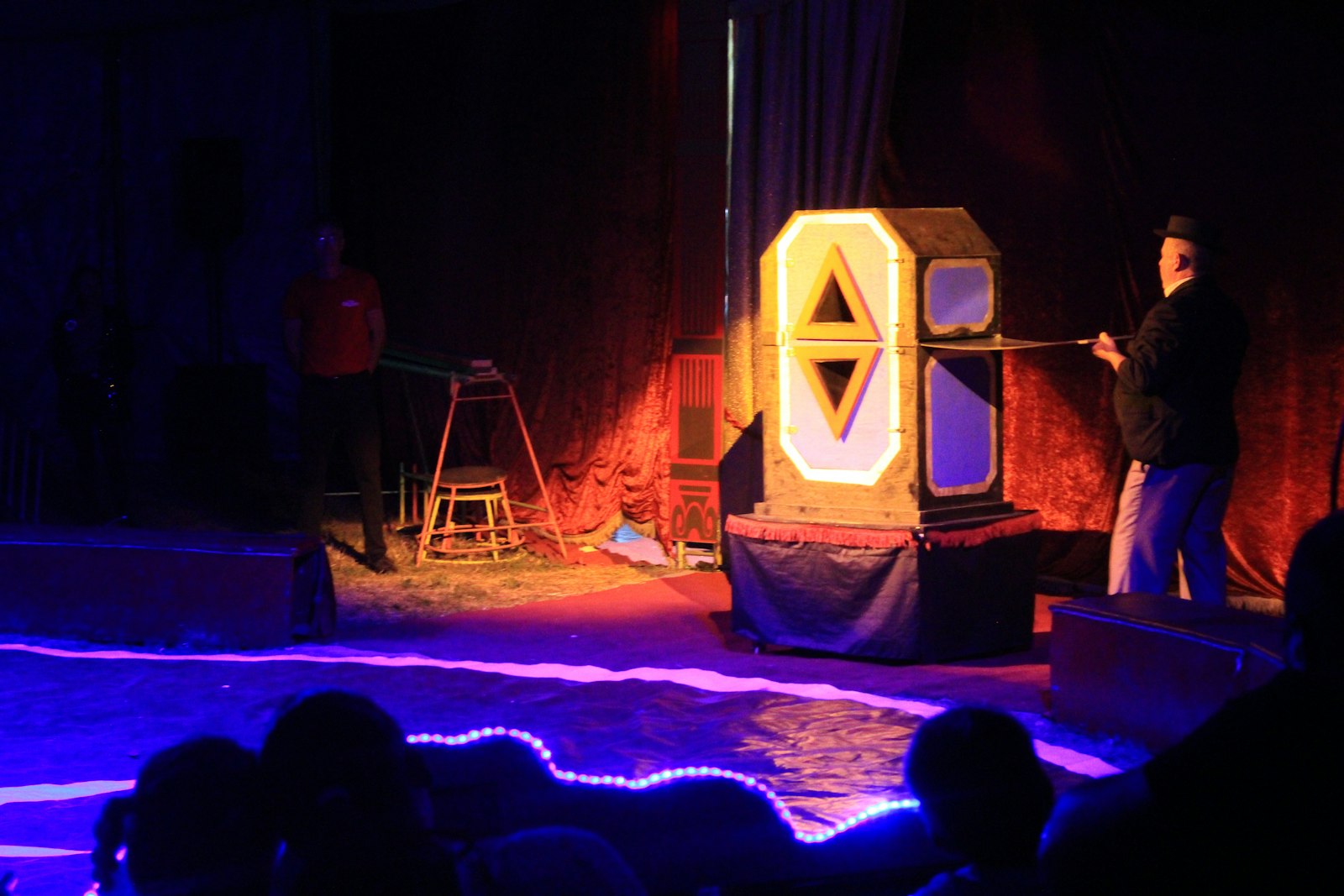
In Budapest, the city where he was born, the Circus of Budapest premiered a new Houdini show on October 30, as Reuters reported. Its director, Laszlo Magacs, called him “the first influencer in the world”. In Hollywood, the Official Houdini Séance was held at the Magic Castle on October 31. That is a lot of attention for a man who has been dead for a hundred years. Which, if you think about it, is exactly the kind of publicity he would have planned.
From Erik Weisz to Harry Houdini
He was born Erik Weisz on March 24, 1874, in Budapest, the son of a rabbi. The family emigrated to the United States and settled in Appleton, Wisconsin, before moving to New York City. The young performer borrowed his stage name from the French magician Jean-Eugène Robert-Houdin, whom he admired. Later, in a move that every modern feud account would respect, he wrote a whole book trying to debunk his former idol: The Unmasking of Robert-Houdin (1908).
His early career was not glamorous. He worked as a trapeze artist and played vaudeville in New York with modest success. Around 1900 everything changed when he made escape the whole act. Handcuffs, ropes, prison cells, milk cans, coffins: if it could be locked, he wanted to get out of it in public. In one stunt, he was chained, locked in a weighted box and dropped into the water from a boat, only to resurface free. In another, he hung roughly 23 meters above the ground and wriggled out of a straitjacket while the street below watched. In 1912 he introduced a water escape in which he was lowered upside down into a tank with his feet locked in stocks. The Budapest show recreates exactly that number.
Why people call him the first influencer
The influencer label is a modern one, of course. It is also a little cheeky. But it fits better than you might think. Houdini understood that the trick was only half the product. The other half was the story around it: the challenge, the danger, the newspapers, the crowd. Seen from today, his outdoor stunts worked like free trailers for the paid show. He turned a jail break into a press release. He made his own body the brand.
He also moved early into the new media of his time. Between 1916 and 1923 he appeared in a number of films, at a moment when cinema was still finding its grammar. If you want a modern comparison, think of David Blaine sitting in a glass box above the Thames in 2003, or every creator whose “can I survive 24 hours in…” video racks up millions of views. The format is old. Houdini just did it without a ring light.
Pop culture has kept returning the favor. Tony Curtis played him in the 1953 film Houdini, Adrien Brody in a 2014 television miniseries. Every magician who ever turned a stunt into a spectacle owes him something, whether they admit it or not.
The skeptic in the séance room
There is a twist in the Houdini story that makes him more than a showman. In his last years he became one of the most famous critics of spiritualism, the fashionable belief that mediums could talk to the dead. He knew how illusions are made because making them was his job, honestly labeled as entertainment. He wrote A Magician Among the Spirits (1924) and sat on a committee for a 1924 Scientific American contest that offered 2,500 dollars to any medium who could prove genuine spirit phenomena under strict conditions. His pushback helped keep the prize from going to the Boston medium known as Margery.
In 1926, a few months before his death, he testified before Congress in support of a bill that would have outlawed fortune-telling for money in Washington, D.C. The bill died in committee. His friendship with Arthur Conan Doyle, the creator of Sherlock Holmes and a committed spiritualist, collapsed into a public feud. The man who invented the most rational detective in literature believed in séances. The man who made a living from illusions did not. You could not script it better.
A death on Halloween and a widow’s vigil
Houdini died in Detroit on October 31, 1926, at the age of 52, from peritonitis linked to a ruptured appendix. Shortly before, a university student had struck him in the stomach. Historians still debate how much those blows had to do with his death.
He and his wife, Wilhelmina Beatrice Rahner, known as Bess, had agreed that whoever died first would try to contact the other. Bess held séances on the anniversary of his death for ten years. The last one, in 1936, took place on the roof of the Knickerbocker Hotel in Hollywood and was broadcast by radio. Nothing happened. Bess ended her vigil. The tradition did not end with her: magicians and fans have kept holding Houdini séances ever since, including this year’s centennial edition at the Magic Castle with the medium Rob Zabrecky.
Why Houdini still matters
It is tempting to treat the centenary as pure nostalgia, a nice Halloween story with chains and water tanks. But Houdini’s legacy is very current. He showed that attention can be engineered, that a personal brand can outlast its owner and that the most effective performers are also the best skeptics of other people’s performances.
That last lesson is the one worth taking home. You live in a world full of people who promise you miracles in fifteen seconds of video. Houdini would have loved the stage. He would also have asked, very loudly, how the trick is done.
Key facts at a glance
- Who: Harry Houdini was born Erik Weisz in Budapest on March 24, 1874. He became the world’s most famous escape artist.
- When: Houdini died in Detroit on October 31, 1926, at the age of 52, from peritonitis linked to a ruptured appendix.
- Centenary: The Circus of Budapest premiered a new Houdini show on October 30, 2026. The Official Houdini Séance took place at the Magic Castle in Hollywood on October 31, 2026.
- Skeptic: Houdini exposed fraudulent mediums, wrote A Magician Among the Spirits in 1924 and testified before Congress in 1926 on a bill against paid fortune-telling.
- Séances: His widow Bess held séances on the anniversary of his death for ten years and ended the vigil in 1936 after a radio broadcast séance on the roof of the Knickerbocker Hotel.
FAQ
When did Harry Houdini die?
Harry Houdini died on October 31, 1926, in Detroit, so Halloween 2026 marked the 100th anniversary of his death.
Why is Houdini called the first influencer?
The director of the new Budapest circus show, Laszlo Magacs, called Houdini the first influencer in the world because of his talent for self-promotion and public stunts that turned escapes into mass spectacles.
Did Houdini ever contact his wife after death?
No. Bess Houdini held séances for ten years after his death and declared in 1936 that he had not come through.