
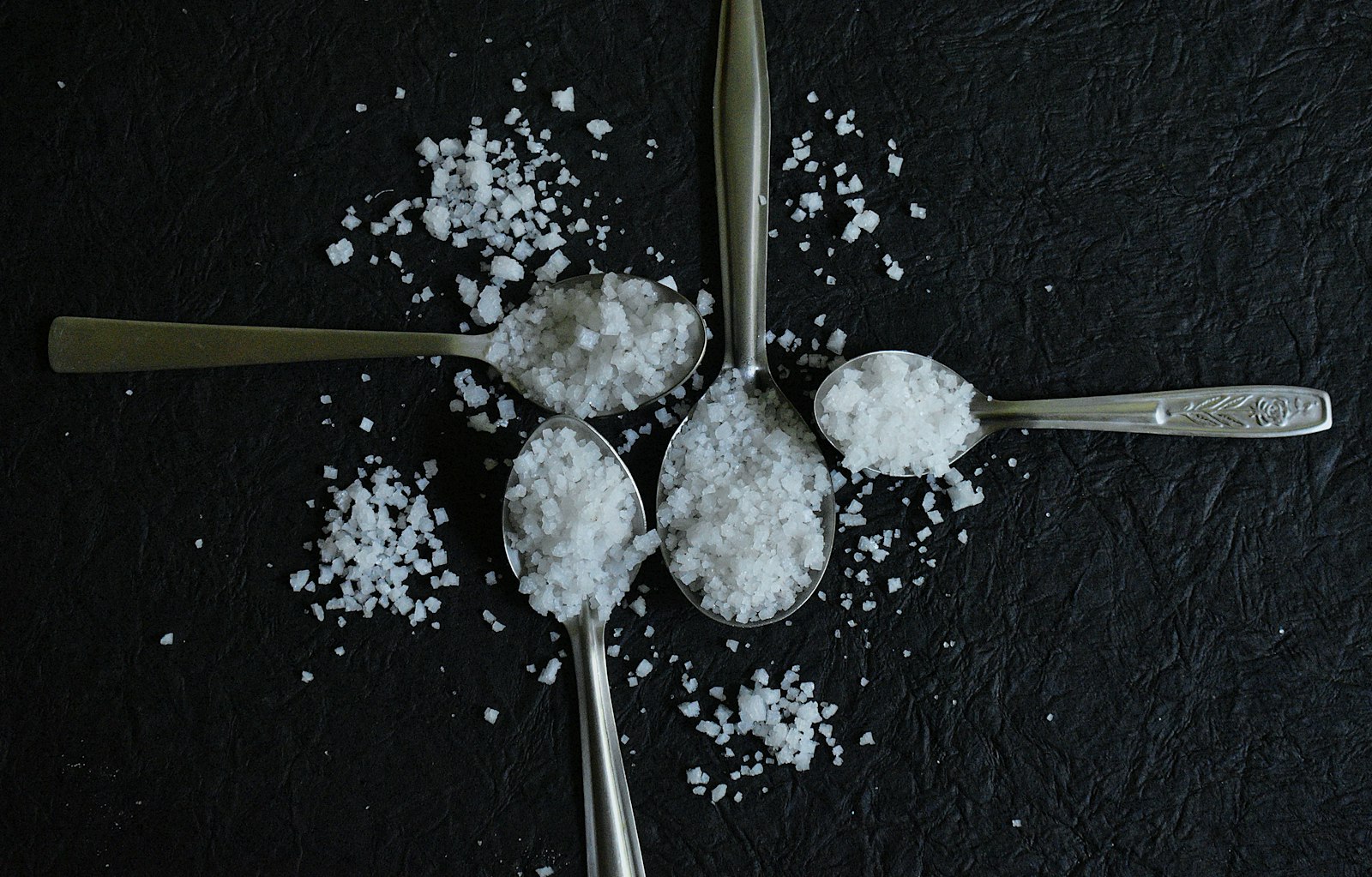


Salt has inspired Gandhi’s Salt March, supposedly paid Roman soldiers and given the internet Salt Bae. Now a group of researchers wants it to do something less dramatic: save lives by quietly changing its recipe. A new modelling study published on November 4, 2026 in the journal Nature Health estimates that if the world swapped ordinary table salt for a potassium-enriched version, close to three million deaths a year could be prevented.
That is a headline number that deserves a careful look, because it comes from a model rather than a trial. But the idea behind it is simple enough to fit on a spice rack. It may soon reach yours.
What the study looked at
The research team, led by scientists at The George Institute for Global Health, modelled the effect of replacing regular sodium chloride with a blend of 75 percent sodium chloride and 25 percent potassium chloride. The study, titled “Global health outcomes from replacing dietary sodium chloride with potassium-enriched salt,” covered 193 countries. The researchers started from current blood pressure levels by age, sex and country, then estimated how the swap would change sodium and potassium intake, blood pressure and ultimately the risk of cardiovascular and kidney disease.
The logic is physiological rather than magical. Less sodium tends to lower blood pressure. More potassium helps the kidneys get rid of sodium, which also lowers blood pressure. A salt that does both at once gives you a double nudge without asking you to change how your food tastes very much. Cheng-Han Chen, MD, who was not involved in the research, summarized the mechanism for Healthline: potassium helps the kidneys remove sodium from the body and lowers blood pressure.
The numbers, scenario by scenario
If all salt were switched, including the salt in processed and restaurant food, the model estimates about 2.96 million deaths prevented every year worldwide, plus more than 10 million new cases of cardiovascular and chronic kidney disease avoided. If only the salt people use at home were replaced, the figure drops to about 1.85 million deaths per year. If only people with high blood pressure made the switch at home, it would still be around 590,000 deaths a year.
In absolute numbers, the largest estimated gains are in the most populous countries. For China, the model estimates more than one million deaths prevented per year in the full switch scenario. For India, it is close to 400,000. For the United States, the researchers estimate nearly 105,000 deaths and about 492,000 new disease cases avoided annually.
Context matters here. According to the background figures cited with the study, about one in three adults aged 30 to 79 lives with high blood pressure, roughly 1.4 billion people. Cardiovascular disease caused 19.2 million deaths in 2023. In Europe and North America, more than 70 percent of salt intake comes from processed and restaurant foods, which suggests that in those regions food manufacturers hold far more leverage than your salt shaker.
Not a new idea, but a bigger one
Potassium-enriched salt has a track record. The large Salt Substitute and Stroke Study in rural China, presented in 2021, found that people who used a salt substitute had a 14 percent lower risk of stroke than those using regular salt. The World Health Organization endorsed potassium-enriched salt in 2025. What the new paper adds is a global estimate, country by country, of what that kind of switch might mean at population scale.
Co-lead author Liping Huang put the motivation plainly in comments to Healthline, noting that it is really hard for people to cut back on salt. Public health campaigns have long tried to get people to eat less salt, with limited success. Changing what is in the salt is the public health version of a stealth upgrade, a bit like when your favorite band quietly remasters an album and you only notice it sounds better.
The kidney caveat
The study is unusually honest about the downside. People with advanced chronic kidney disease may not be able to clear extra potassium efficiently, which can lead to dangerously high blood potassium levels, known as hyperkalemia. For people with kidney disease in stages three to five, the model estimates about 750,000 deaths prevented through lower blood pressure, but also around 100,000 deaths caused by hyperkalemia. That trade-off is why experts say people with kidney problems should avoid potassium-enriched salt unless a doctor tells them otherwise.
There are other limits. The model relies on data from a few years ago and on many assumptions about how people and food producers would behave. A real-world switch would take years. And potassium-enriched salt typically costs about twice as much as regular salt, which matters in the countries where the model sees the biggest gains. In short: the estimate shows what is possible, not what is guaranteed.
What it means for your kitchen
Potassium-enriched salt products already exist, so this is not a lab fantasy. If you have kidney disease, heart failure or take medication that affects potassium levels, the sensible move is to ask your doctor before switching. And none of this cancels the older advice: a lot of the salt you eat is already hidden in bread, ready meals and takeaway food.
The larger point of the study is political as much as nutritional. If governments and food companies changed the salt in processed food, millions of people would benefit without having to think about it at all. That is the dream of every public health researcher: an intervention so quiet it never trends. Salt Bae will survive the switch. His sprinkle might just be doing a little more good.
This article is for general information only and does not replace advice from a doctor or other qualified health professional.
Key facts at a glance
- What: A modelling study in Nature Health estimates the health effects of replacing regular salt with potassium-enriched salt in 193 countries.
- When: The study by researchers at The George Institute for Global Health was published on November 4, 2026.
- Main result: A full global switch to a blend of 75 percent sodium chloride and 25 percent potassium chloride could prevent about 2.96 million deaths a year.
- Caveat: For people with advanced kidney disease the model estimates about 100,000 deaths a year from high blood potassium alongside 750,000 deaths prevented.
- Note: for general information only, not medical advice.
FAQ
How many deaths could potassium-enriched salt prevent?
A Nature Health modelling study estimates that switching all salt worldwide to potassium-enriched salt could prevent about 2.96 million deaths a year. Replacing only salt used at home would prevent about 1.85 million.
Is potassium-enriched salt safe for everyone?
No. People with advanced kidney disease may not clear extra potassium well and should not use it without medical advice.
What is potassium-enriched salt?
Potassium-enriched salt replaces part of the sodium chloride in table salt with potassium chloride. The study modelled a blend of 75 percent sodium chloride and 25 percent potassium chloride.
Sources
- Global health outcomes from replacing dietary sodium chloride with potassium-enriched salt (Nature Health)
- Switching to potassium-enriched salt could prevent millions of global deaths (News-Medical)
- Healthier Salt Substitute May Prevent Millions of Deaths From Heart Disease (Healthline)
- Switching to salt substitute decreased stroke risk by 14 percent (Healio)