

When Jimmy Kimmel looked out over the Oscars audience in 2023 and wondered aloud whether Ozempic was right for him, the joke landed because everyone in the room understood it. Three years later the weight loss injections have moved from Hollywood punchline to everyday prescription. And now dermatologists want to talk about a part of the body the before and after photos rarely show: your fingertips.
A study presented at the European Academy of Dermatology and Venereology (EADV) Congress in Vienna, which ran from September 30 to October 3, reports that people taking GLP-1 drugs were far more likely to report nail detachment and hair loss than comparable people who were not. The headlines since then have been dramatic. Fingernails falling off! The data are more interesting than the headlines and also a good deal more cautious.
What the study looked at
The researchers surveyed 575 adults using GLP-1 receptor agonists and 1,329 adults who had never taken them. Everyone in both groups had type 2 diabetes, obesity or both, which matters, because both conditions can affect skin, hair and nails on their own. Participants came from France, the United States, Brazil and Mexico. On average the users had been on treatment for 18.5 months, according to Healthline. The abstract did not specify which individual drugs they were taking.
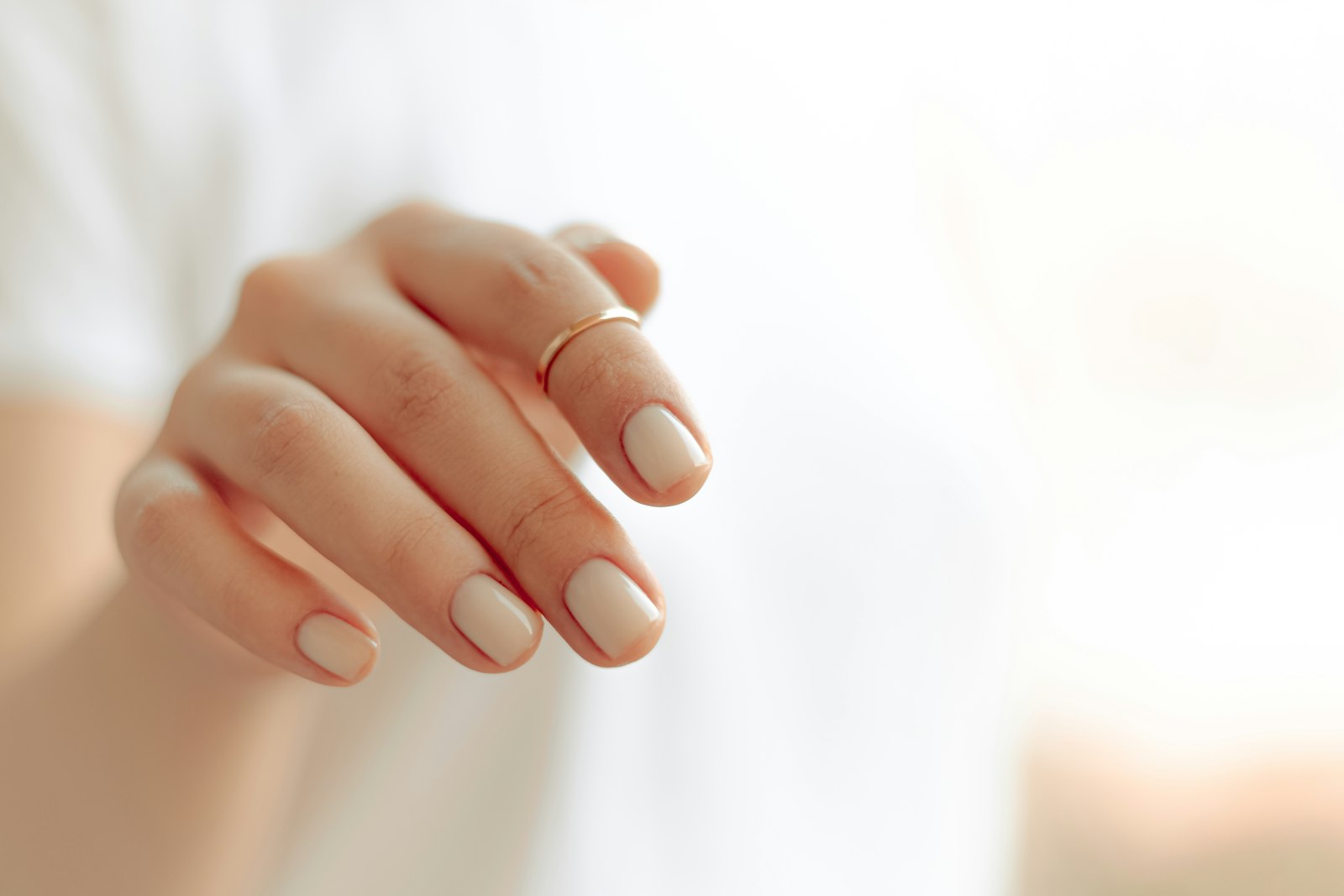
The differences were striking. Nail detachment, known medically as onycholysis, was reported by 39 percent of users versus 9 percent of nonusers. Nail discolouration came in at 46 versus 17 percent. Any nail disorder at all was reported by 66 percent of users compared with 53 percent in the control group, as summarised by the European Medical Journal.
A companion analysis of the same participants looked at hair. Half of the GLP-1 users reported unusual hair loss compared with about a third of nonusers. Loss of hair volume or density was reported by 42 versus 19 percent. Hair loss that started after treatment began was reported by 26 versus 12 percent. Scalp redness was about three times as common among users.
The fine print you should actually read
Here is where the story gets less tabloid and more useful. This was a cross-sectional survey: people reported their symptoms at one point in time. It can show an association. It cannot show that the drugs caused the changes. The researchers say so themselves.
About half of the GLP-1 users said they already had nail problems before starting treatment. When the analysis looked only at changes that began after treatment, the link with nail detachment nearly disappeared, Healthline reports. Adjusting for existing skin conditions plus nutritional deficiencies weakened some associations too, although detachment and discolouration still remained roughly two to three times as common among users. Study author Charles Taïeb told Healthline that “a substantial part of the nail excess reflects the patients’ overall health rather than the drug itself”. He did not rule out a modest drug effect.
One finding pushes back against the obvious explanation. Users were much more likely to have lost weight in the previous three months (76 versus 47 percent), yet the nail differences held up even among people who had lost weight. Weight loss alone, then, does not seem to explain everything. What does explain it remains open. The researchers say they plan to follow patients from the start of treatment to study timing, causes and whether the changes reverse.
Why hair and nails react at all
Hair and nails are the body’s slow news channels. They grow continuously, so a stressor today can show up weeks or months later as shedding or a lifting nail. Experts interviewed by Healthline pointed to several plausible routes. Rapid weight loss is known to disrupt hair growth temporarily. A smaller appetite can mean less protein, iron and zinc on your plate, all of which matter for keratin, the protein your nails and hair are made of. Dermatologist Tanya Evans, who was not involved in the study, said the drugs may affect nails “indirectly rather than directly” and that inflammation may play a role in some patients’ hair changes.
There is also a regulatory detail worth knowing. Nail detachment and discolouration are not listed as adverse reactions in the current US prescribing information for Ozempic, Wegovy, Mounjaro or Zepbound. Hair loss does appear on several of those labels, based on reports that do not establish how often it happens or whether the drug caused it.
The beauty angle nobody put in the ad
Nail culture has been a fashion statement ever since Revlon launched its first nail enamel in 1932. Today it is practically a genre: chrome finishes, glazed doughnut nails, the whole manicure-as-accessory economy. So it is no surprise that a study about lifting nails hit social media harder than many cardiovascular findings. If you have ever watched Death Becomes Her, you know that every miracle treatment in Hollywood comes with a third act in which the body stops cooperating. Real medicine is less theatrical. A detached fingernail is uncomfortable and unsightly, but according to the experts quoted by Healthline it typically regrows as the new nail grows out, which takes around four to six months for a fingernail and nine to twelve months for a toenail.
The practical message from the specialists is refreshingly unglamorous. Do not stop a prescribed medication on your own because of a nail change. Do tell your doctor about new hair, scalp or nail problems. See a dermatologist if a nail lifts or a change does not improve. Evans summed it up: “don’t panic, but don’t ignore persistent nail changes either”.
Where this leaves you
Fact: in this survey, GLP-1 users reported nail and hair problems far more often than similar people not taking the drugs. Interpretation: a large share of that difference probably reflects the users’ underlying health. The true size of any drug effect is unknown. Outlook: the planned prospective research should clarify whether these changes are caused by the medication, the weight loss, nutrition or something else. It should also show whether they fade over time. Until then the injections that changed the conversation about bodies are also changing the conversation in nail salons. That is a reason for attention rather than alarm.
This article is for general information only and does not replace advice from a doctor or other qualified health professional. If you notice changes in your nails, hair or scalp while taking any medication, please speak to your doctor.
Key facts at a glance
- What: A survey presented at the EADV Congress 2026 in Vienna compared 575 GLP-1 users with 1,329 nonusers who had type 2 diabetes or obesity.
- Nails: Nail detachment was reported by 39 percent of GLP-1 users versus 9 percent of nonusers, while nail discolouration was reported by 46 versus 17 percent.
- Hair: Unusual hair loss was reported by 50 percent of users versus 34 percent of nonusers.
- Status: The survey shows associations only because it relied on self-reported symptoms at a single point in time.
- Note: for general information only, not medical advice.
FAQ
Do GLP-1 drugs like Ozempic cause nails to fall off?
That has not been proven. A survey presented at EADV 2026 found nail detachment was reported far more often by GLP-1 users, but the design shows an association only and much of the difference may reflect patients’ underlying health.
Can GLP-1 medications cause hair loss?
In the same survey 50 percent of GLP-1 users reported unusual hair loss compared with 34 percent of nonusers. Hair loss appears on several US drug labels, but how often the drugs cause it has not been established.
What should you do if your nails change on a GLP-1 drug?
Experts advise telling your doctor and seeing a dermatologist if a nail lifts or a change persists. They advise against stopping a prescribed medication on your own.