
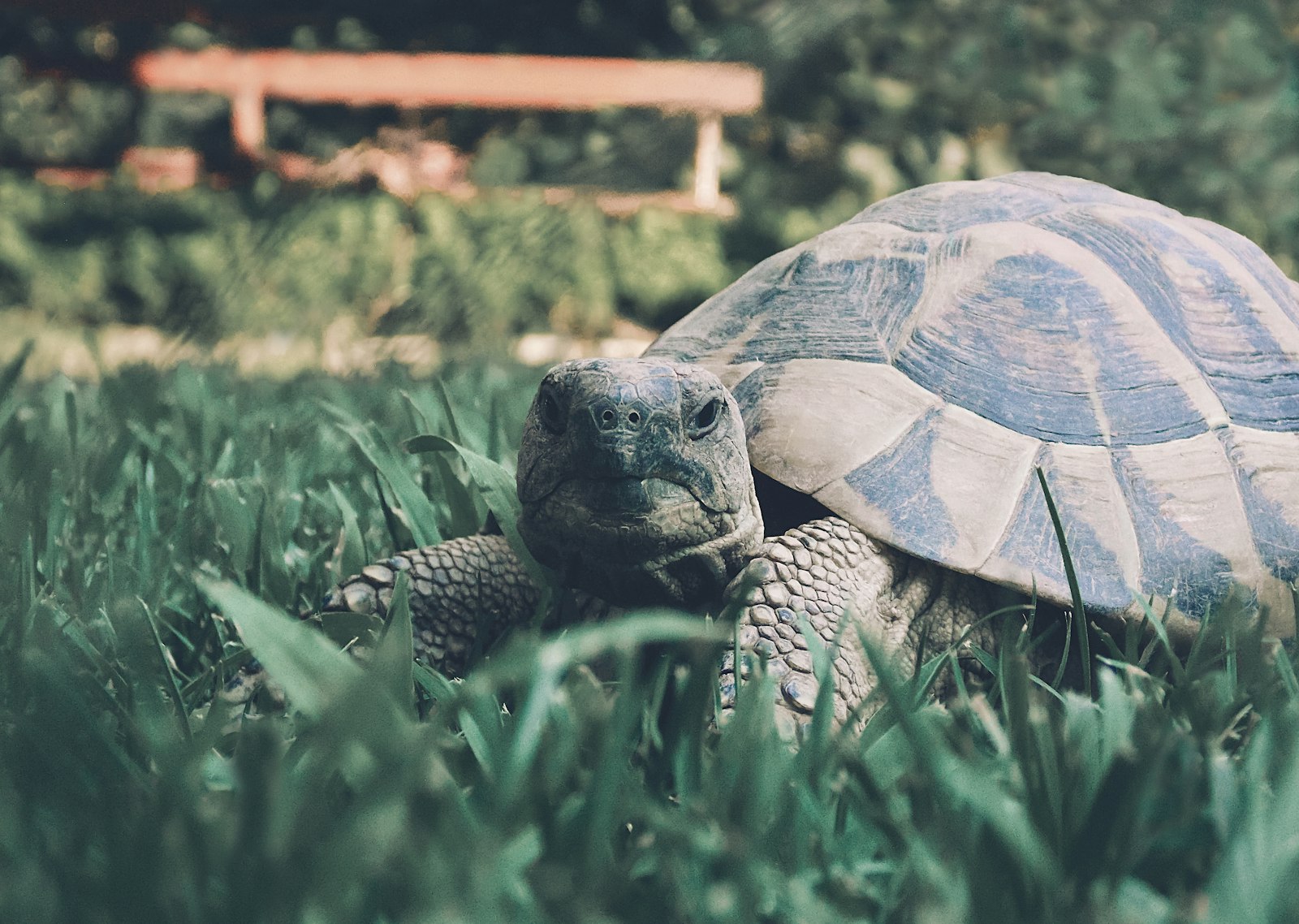


When Jonathan hatched, Charles Darwin was still sailing around the world on the Beagle, Queen Victoria had not yet taken the throne and nobody had made a telephone call. Today the Aldabra giant tortoise is estimated to be around 194 years old, lives on the lawn of the governor’s residence on St Helena and is widely described as the oldest known living land animal. He has also, as of this week, had his DNA published in a scientific journal. Which is more than most of us will ever achieve, however many green smoothies we drink.
The study, published on October 7 in Science Advances, set out to answer a question that has quietly become a multibillion-dollar obsession for humans: why do some bodies age more slowly than others? The answer it offers is fascinating. It is also, as you will see, far more modest than some of the headlines suggest.
Who Jonathan is and why his age is an estimate
Jonathan arrived on St Helena in 1882 as a gift to the island’s later governor. He was already fully grown, which is why record keepers have treated him as at least 50 at the time and settled on a hatching year of around 1832. Nobody wrote down his birthday, so the figure is an informed guess rather than a birth certificate. He lives at Plantation House, the governor’s residence, where he has outlived a long line of officials. Napoleon, St Helena’s most famous resident, had died on the island decades before Jonathan got there, which makes the tortoise the more successful long-term guest.
He is not unmarked by time. According to reporting compiled by ScienceBlog, cataracts have left him nearly blind and his sense of smell has declined sharply, although his hearing remains excellent. Carers hand-feed him regularly. Earlier this year, false online reports claimed he had died. The St Helena government denied it the next morning. Jonathan, presumably, did not comment.
What the scientists actually did
Getting DNA from a protected, very old tortoise is harder than it sounds. A blood draw was ruled out. Stephen W. Clark, the study’s senior author and chief scientist at the Nashville nonprofit Kallel, told Live Science that he did not want to be “the doctor that killed Jonathan.” Early cheek swabs mostly yielded bacterial DNA. A later cheek scrape produced Jonathan’s own genetic material, although it was fragmented. To fill the gaps, the team used a high-quality reference genome from Tank, a 36-year-old Aldabra tortoise. They also drew comparisons with Lonesome George, the famous Galápagos tortoise who died in 2012.
The researchers then looked at two things. First, his genes: they identified 287 gene variants unique to Jonathan that sit in pathways linked to ageing, including DNA repair and telomere function. Second and more interesting: his epigenetics. Epigenetic marks such as DNA methylation act a little like switches that tell genes when to turn on or off. With age, these switches tend to become more disordered, a pattern the authors measured as “methylation entropy.”
Why his mitochondria are the headline
This is the nuance that gets lost in the “secret of eternal youth” coverage. Across most of his genome, Jonathan’s methylation was in fact more disordered than that of young tortoises. He is, genetically speaking, old. But in genes tied to mitochondria, the small structures that supply cells with energy, his pattern was more organised. The authors suggest that keeping these energy genes stable over time may be one factor in his longevity.
Justin Gerlach, a biologist at Peterhouse, University of Cambridge, who was part of the team, put it simply on NPR: Jonathan appears to be “genuinely aging more slowly than we would expect.” That is a striking finding. It is also a finding about one tortoise.
The fine print you should not skip
This is where we, as a magazine, have to be the slightly annoying friend at the party. The study does not prove that any of these features cause Jonathan’s long life. The authors did not test that. Vincent Lynch, a biologist not involved in the research, told Live Science he doubts that entropy is a reliable way to measure ageing in methylation, since methylation can be unpredictable anyway. His alternative explanation was memorably dry: “Maybe Jonathan is just really good at being old.”
There are other open questions. Nobody knows yet whether Jonathan is an outlier or whether many Aldabra tortoises share these traits. Gerlach noted on NPR that the team cannot rule out biases, for instance the fact that large male tortoises tend to attract the most attention. Jonathan has no offspring on St Helena that could be studied. And a fuller picture of his genome will only be possible with more tissue, which realistically means after his death.
So what does this mean for you?
If you were hoping for a Jonathan protocol, we have to disappoint you. The research does not translate into a pill, a supplement or a morning routine. Even the science outlets enthusiastic about the study note that a tortoise epigenome is not necessarily relevant to humans. Tortoises are cold-blooded reptiles with a metabolism that runs at a very different pace from yours.
What the study does offer is perspective. The longevity industry sells the idea that ageing is a problem you can hack with the right purchase. Jonathan suggests something less marketable: that exceptionally long lives may rest on deep biological features shaped over generations, plus a generous helping of luck, a quiet lawn and very attentive caretakers. Pop culture got there first, by the way. In Finding Nemo, Crush the sea turtle boasts of being 150 and “still young.” Jonathan has him beat by more than four decades and has never once surfed the East Australian Current.
Our interpretation: the most valuable thing about this research may be the questions it opens up about how cells keep their energy systems stable over time. Those questions could matter for human ageing research in the long run. The answers, however, are still a long way off. In the meantime, the world’s oldest land animal continues doing what he has done for nearly two centuries. He eats, he naps and he ignores the hype entirely. There are worse longevity strategies.
This article is for general information only and does not replace professional medical advice. If you have questions about your own health or ageing, please speak to a doctor.
Key facts at a glance
- Who: Jonathan is an Aldabra giant tortoise on St Helena, estimated to be about 194 years old and described as the oldest known living land animal.
- Study: A paper titled “Epigenetic insights into extreme longevity in the world’s oldest terrestrial animal, Jonathan” was published in Science Advances on October 7, 2026.
- Findings: Researchers identified 287 unique gene variants in ageing-related pathways plus unusually stable methylation in genes linked to mitochondria.
- Limits: The study cannot show cause and effect. It is not yet known whether Jonathan is an outlier among Aldabra tortoises.
- Note: for general information only, not medical advice.
FAQ
How old is Jonathan the tortoise?
Jonathan the tortoise is estimated to be about 194 years old, with a hatching year of around 1832. The date is an estimate because he arrived on St Helena in 1882 as a fully grown adult.
What did the Jonathan the tortoise DNA study find?
The study found 287 unique gene variants linked to ageing pathways such as DNA repair. It also found that methylation in his mitochondrial genes was more orderly than expected for his age.
Does Jonathan the tortoise’s DNA reveal how humans can live longer?
No, the study does not offer any method for humans to live longer. Tortoise biology differs greatly from human biology and the findings have not been shown to cause his long life.
Sources
- Jonathan the tortoise has lived to 194 years old: now scientists think they know why (Live Science)
- Study finds 194-year-old tortoise is aging more slowly than you would expect (NPR via Alabama Public Radio)
- DNA from world’s oldest tortoise may hold key to human ageing (The Telegraph via AOL)
- 194 year old tortoise DNA study, with paper reference (Science 2.0)
- The oldest known land animal alive today hatched before the telephone was invented (ScienceBlog)