
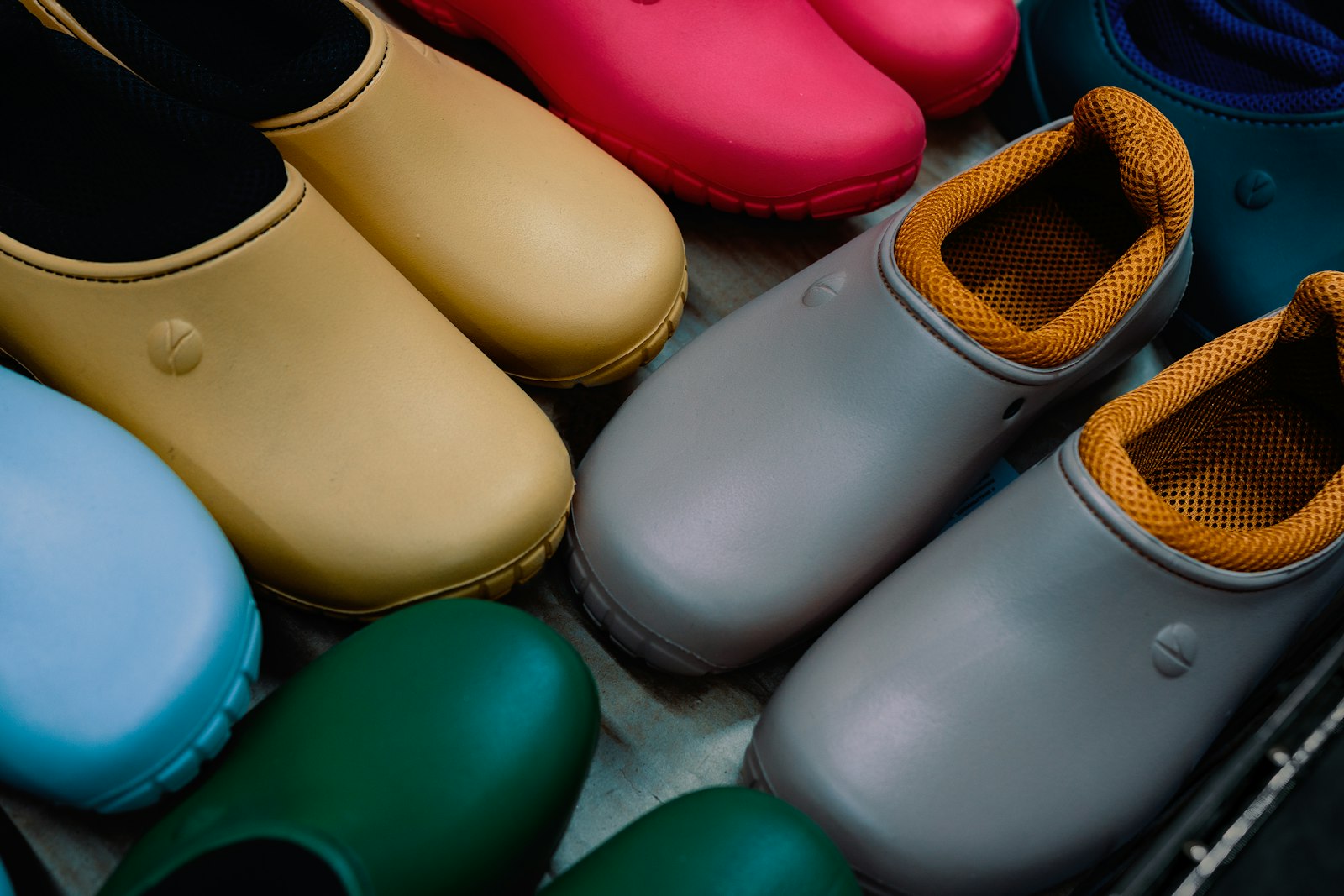


Somewhere in a boardroom in Colorado, a foam clog with ventilation holes just outperformed a good part of the fashion industry. On October 29 Crocs reported its third quarter results, raised its full-year outlook and watched its stock jump about 25 percent in a single session. If you have spent the last twenty years explaining to friends that you only wear yours in the garden, this might be a good moment to stop apologizing.
The numbers deserve a closer look, because the story behind them says a lot about how people shop right now. It also says something about fashion’s oldest trick: turning something everybody laughs at into something everybody wants.
The quarter in numbers
According to the company’s earnings release, Crocs Inc. generated revenue of $1.043 billion in the third quarter of 2026, up 4.6 percent on the prior year. The Crocs brand itself brought in $873 million, an increase of 4.4 percent. Adjusted earnings per share came in at $3.69, up 26.4 percent and comfortably above the $3.31 analysts had expected, according to consensus figures compiled by TipRanks and reported by the Seoul Economic Daily.
The more interesting detail sits in the geography. International revenue for the Crocs brand climbed 11.8 percent to $434 million, while North America slipped 2.1 percent to $438 million. In other words, the clog is now growing faster abroad than at home. On the earnings call, management named China, India and Japan as key contributors. International direct-to-consumer sales rose 24 percent.
The company now expects full-year revenue to grow about 3 percent, up from a previous forecast of 1 to 2 percent. Adjusted earnings per share are projected at $14.45 to $14.65. One footnote matters here: the quarter included $64 million in refunds of tariffs collected under the International Emergency Economic Powers Act, following the US Supreme Court ruling of February 20, 2026. Crocs itself calls these refunds non-recurring. So part of the shine on the profit line comes from a courtroom, not from a stockroom.
HEYDUDE finally walks again
For investors, the real plot twist was HEYDUDE. Crocs bought the casual slip-on brand in a deal announced in late 2021. For a long time the purchase looked like the sequel nobody had asked for. In the third quarter, HEYDUDE revenue rose 6.1 percent to $170 million, its first return to growth. Wholesale sales jumped 14 percent.
CEO Andrew Rees called it “an important inflection” for the brand. According to the call, the turnaround came from fewer discounts, cleaner inventory and a run of collaborations that sold out quickly. It is the least glamorous recipe in retail. It also tends to work.
From boat show to Balenciaga
To understand why Crocs keeps surviving its own reputation, you have to rewind. The first model, called the Beach, debuted at the Fort Lauderdale Boat Show in 2002 as a practical shoe for people who spend their days on wet decks. Nobody at that show imagined a runway.
Then fashion did what fashion does with anything it once mocked. In 2016 Christopher Kane sent Crocs down his London Fashion Week runway. In 2017 Balenciaga, then led by Demna, released a platform version roughly ten centimeters tall that became one of the most discussed shoes of the decade. The logic was the same one that made the “ugly” dad sneaker a status object: if a luxury house chooses the least elegant shoe on the market, wearing it stops being a mistake and becomes a statement.
Crocs understood that game better than most. The Jibbitz charms, which the company acquired in 2006, turned every pair into a personal mood board. Collaborations did the rest. This quarter alone, management mentioned partnerships with Pendleton, Yu-Gi-Oh! and a Dinoco edition for the 20th anniversary of Pixar’s Cars. Lightning McQueen fans will recognize the logo instantly. Fashion historians will recognize the strategy: scarcity, nostalgia and a shoe that photographs well on social media.
Sandals, ballet flats and the art of diversification
The classic clog is still the hero, but it no longer works alone. According to the earnings call, sandals grew at a double-digit rate, led by the Miami and Saturday lines. Management described sandals as a year-round business now. There is even a Crocs ballet flat, which drew a strong response. Yes, the brand that once embodied comfort over style is now quietly riding the ballet flat wave that Miu Miu helped start on the runway. Fashion has a sense of humor. Occasionally it has a business plan too.
Clog variations such as the Echo, the Crocband and the Platform also played a role. The Echo 2.0 got a campaign fronted by an Olympic table tennis champion, which management says generated roughly 40 billion impressions in Asia. That figure comes from the company and could not be independently verified.
What the K-shaped shopper tells you
The most useful remark on the call had nothing to do with clogs. Management described the US economy as K-shaped, with “weakness at the low-end consumer” and strength at the high end. Most of the brand’s volume sells between $50 and $60, a price that sits in a sweet spot: cheap enough to be an impulse buy, expensive enough to feel like a treat.
That is the real lesson behind the Crocs Q3 2026 results. When budgets tighten, people do not stop buying fashion. They trade down to things that still feel fun. A $55 clog with a few charms is a small dose of self-expression that does not require a credit check.
What comes next
The outlook for the fourth quarter is ambitious: revenue growth of 7 to 9 percent, with HEYDUDE expected to grow 10 to 12 percent. Management also warned of a highly competitive holiday market and cautious wholesale partners. North America remains the open question. Growth abroad can carry a brand for a while, but the home market is where the clog first became a cultural punchline.
Our reading: Crocs has stopped being a trend and started being infrastructure. It no longer needs Balenciaga to make it cool. It needs you to keep buying sandals in October and charms for your kids. Judging by this quarter, you probably will. And if anyone laughs at your feet this winter, you can now tell them about the share price.
Key facts at a glance
- What: Crocs Inc. reported third quarter 2026 revenue of $1.043 billion on October 29, 2026, an increase of 4.6 percent year on year.
- Brands: The Crocs brand grew 4.4 percent to $873 million while HEYDUDE returned to growth with revenue up 6.1 percent to $170 million.
- Regions: International Crocs brand revenue rose 11.8 percent to $434 million while North America fell 2.1 percent to $438 million.
- Outlook: Crocs now expects full-year 2026 revenue growth of about 3 percent and adjusted earnings per share of $14.45 to $14.65.
- Note: The quarter included $64 million in US tariff refunds that Crocs describes as non-recurring.
FAQ
How did Crocs perform in Q3 2026?
Crocs grew third quarter 2026 revenue 4.6 percent to $1.043 billion. Adjusted earnings per share rose 26.4 percent to $3.69 and beat analyst expectations.
Is HEYDUDE growing again?
Yes. HEYDUDE revenue rose 6.1 percent to $170 million in the third quarter of 2026, its first return to growth, driven by a 14 percent rise in wholesale sales.
Why did Crocs stock jump in October 2026?
Crocs shares rose about 25 percent on October 29, 2026 after the company beat earnings estimates and raised its full-year outlook for revenue and profit.
Sources
- Crocs, Inc. Reports Strong Third Quarter 2026 Results; Raises Full-Year 2026 Outlook (Crocs, Inc. via PR Newswire)
- Crocs Shares Jump 25% as Earnings Beat Lifts Annual Outlook (Seoul Economic Daily)
- Crocs: 3 Key Takeaways for Long-Term Investors (The Motley Fool)
- Crocs Q3 2026 Earnings Call: HEYDUDE Returns to Growth, Guidance Raised (TradingKey)
- Crocs (Wikipedia)