


Most people imagine a misdiagnosis as the moment a doctor misses something. Christina Applegate’s story is the reverse. In some ways it is harder to absorb. In 2021 she announced that she had multiple sclerosis. She became one of the most visible faces of the disease, co-hosting a podcast about life with MS. On Tuesday, October 20, she told listeners that her doctor had delivered news she was not prepared for: “Congratulations, you don’t have MS.”
If you expected the next line to be relief, so did a lot of her listeners. Instead Applegate, 54, said she felt “back at square one.” The symptoms have not gone anywhere. The question of what is causing them has simply reopened. Her story is hers to tell. This article will not speculate about what she does or does not have. What it can do is explain why a diagnosis like MS is surprisingly easy to get wrong. It can also explain what that means if you or someone close to you is going through the same process.
What Christina Applegate said
Applegate made the announcement on MeSsY, the MS-focused podcast she co-hosts with Jamie-Lynn Sigler, who has spoken publicly about her own MS for years. According to ABC News and Good Morning America, Applegate said she still has “every symptom of someone with MS,” still uses a wheelchair at doctor’s appointments and plans to work with her doctors to understand what has happened since 2021. She also said she had taken a break from the podcast to process the news and that she felt she had let down the people for whom she had become a spokesperson.
That last point deserves a gentle answer. Telling the public about a diagnosis that later changes is not a failure of character. It is what happens when someone shares a medical journey in real time. Medicine, as the next part shows, does not always move in a straight line.
Why MS is so hard to pin down
Television has trained you to expect the great diagnostic reveal. In House, the team would throw theories at a whiteboard until Hugh Laurie limped in with the answer, usually after reminding everyone that “it’s never lupus.” Real neurology is slower and far less theatrical. MS is one of its trickiest puzzles.
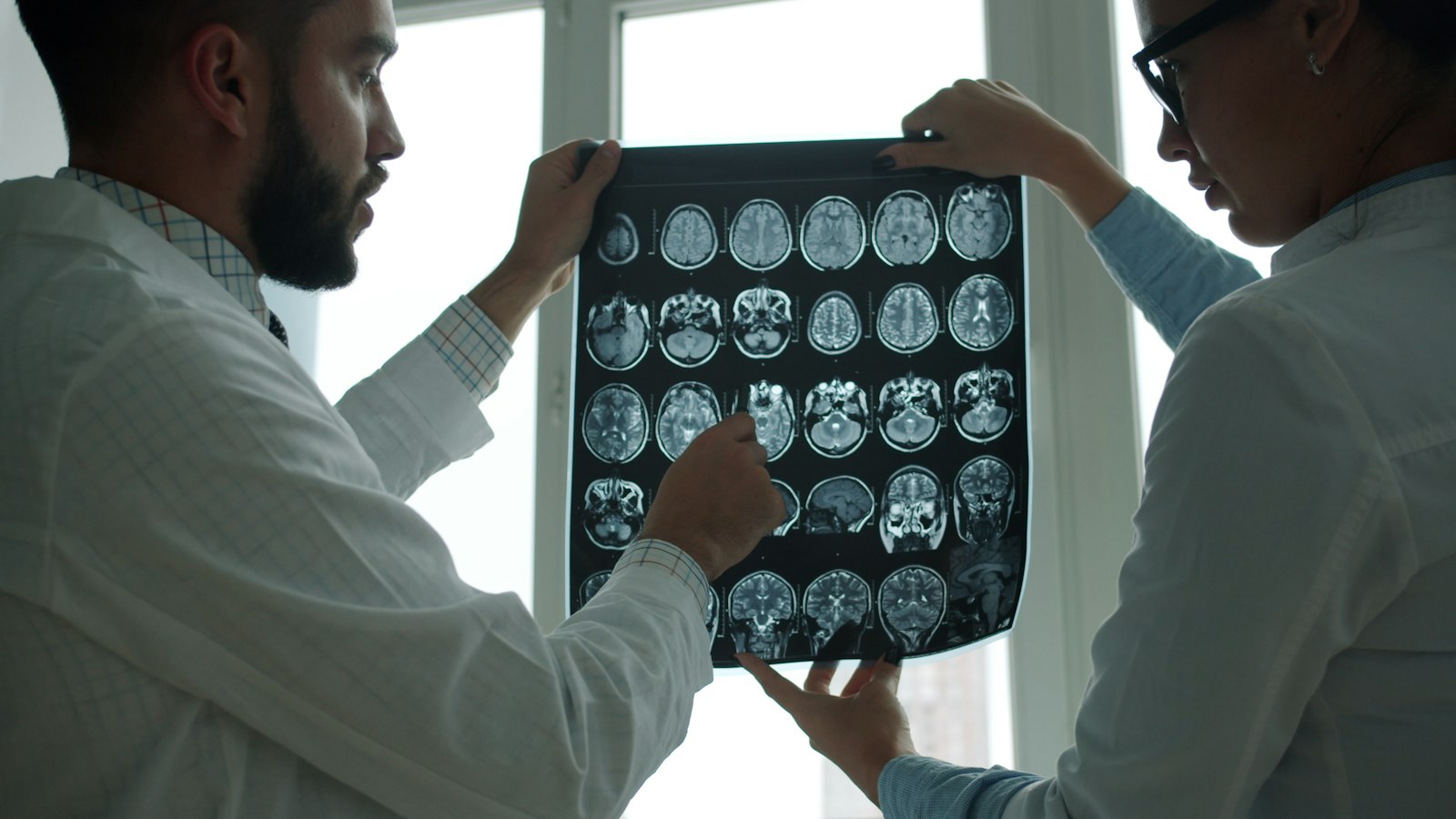
There is no single test that proves someone has MS. Doctors combine a neurological examination, MRI scans and laboratory tests, then apply a set of rules called the McDonald criteria. The symptoms that can point to MS, such as fatigue, numbness or tingling, weakness, dizziness and bladder problems, also appear in many other conditions. Even the scan can mislead: according to Cedars-Sinai, conditions such as stroke or vitamin B12 deficiency can produce symptoms or MRI findings that resemble MS.
How common is an MS misdiagnosis?
In a follow-up episode of the podcast, the Cedars-Sinai neurologist Marwa Kaisey said that in her research nearly one in five people had been misdiagnosed with MS, pointing out that its symptoms are “very common in other things that are not MS.” The figure comes from a study she led with colleagues from Cedars-Sinai, UCLA and the University of Vermont, published in 2019 in the journal Multiple Sclerosis and Related Disorders.
The researchers reviewed 241 patients who had been diagnosed with MS elsewhere and were referred over one year to the specialist MS clinics at Cedars-Sinai or UCLA in Los Angeles. Nearly 18 percent of them turned out not to have MS. The most common correct diagnosis was migraine. Others included radiologically isolated syndrome, in which a scan looks like MS without the symptoms, as well as spine disorders and nerve damage. The consequences were significant: the misdiagnosed patients had been treated for MS for an average of four years, 72 percent had been prescribed MS drugs and the researchers estimated the cost of unnecessary treatment in this group alone at almost 10 million dollars.
A fair reading needs one caveat. This was a study of patients referred to two specialist centres, so it does not mean that 18 percent of everyone with an MS diagnosis is wrongly diagnosed. It does show that the problem is real enough that the team, as co-author Nancy Sicotte put it, often has to “start from the beginning” with referred patients.
What is changing in diagnosis
The good news is that the rulebook is being rewritten with exactly this problem in mind. In September 2025 an international panel published the fifth revision of the McDonald criteria in The Lancet Neurology. According to ECTRIMS, the European committee for MS research, the update aims to improve accuracy and reduce misdiagnosis. Among the changes, two newer MRI markers, the central vein sign and paramagnetic rim lesions, can now count as supporting evidence in certain situations. The optic nerve has been added as a fifth area of the nervous system that doctors assess. A spinal fluid marker called kappa free light chains is now accepted as an alternative to an older test. The revision does not change existing diagnoses.
What does this mean for you? Mainly that a second opinion from an MS specialist is a reasonable step rather than an insult to your first doctor, particularly when symptoms or scans do not quite fit. A changed diagnosis can feel like losing the map just as you had learned to read it. Applegate’s honesty about that feeling may end up being one of the most useful things she has shared, because the question she is now asking, what else could this be, is the one good medicine never stops asking.
This article is for general information only and does not replace medical advice. If you have symptoms or questions about a diagnosis, please talk to a doctor.
Key facts at a glance
- What: Christina Applegate said on her podcast MeSsY on October 20, 2026, that her doctor told her she does not have multiple sclerosis.
- Background: Applegate first announced her MS diagnosis in 2021 and says she still has symptoms while working with her doctors on the cause.
- Study: A 2019 study of 241 patients referred to Cedars-Sinai or UCLA found that nearly 18 percent had been misdiagnosed with MS; migraine was the most common correct diagnosis.
- Diagnosis: No single test confirms MS. The 2024 revision of the McDonald criteria published in September 2025 aims to reduce misdiagnosis.
- Note: for general information only, not medical advice.
FAQ
Does Christina Applegate have MS?
Christina Applegate said on October 20, 2026, that her doctor told her she does not have MS. She has not announced another diagnosis and says she is working with her doctors to understand her symptoms.
How common is MS misdiagnosis?
A 2019 study at Cedars-Sinai and UCLA found that nearly 18 percent of patients referred with an MS diagnosis did not have the disease. The figure applies to referred patients at specialist clinics, not to everyone diagnosed with MS.
What conditions are mistaken for MS?
In the Cedars-Sinai and UCLA study, migraine was the most common correct diagnosis. Others included radiologically isolated syndrome, spine disorders and nerve damage.
Sources
- Christina Applegate says she was misdiagnosed with MS (ABC News)
- Christina Applegate says she was misdiagnosed with MS (Good Morning America)
- Study of Multiple Sclerosis Patients Shows 18 Percent Misdiagnosed (Cedars-Sinai via Newswise)
- Revisions to McDonald diagnostic criteria for multiple sclerosis published (ECTRIMS)
- 2024 McDonald Criteria Revisions Published in The Lancet Neurology (Practical Neurology)