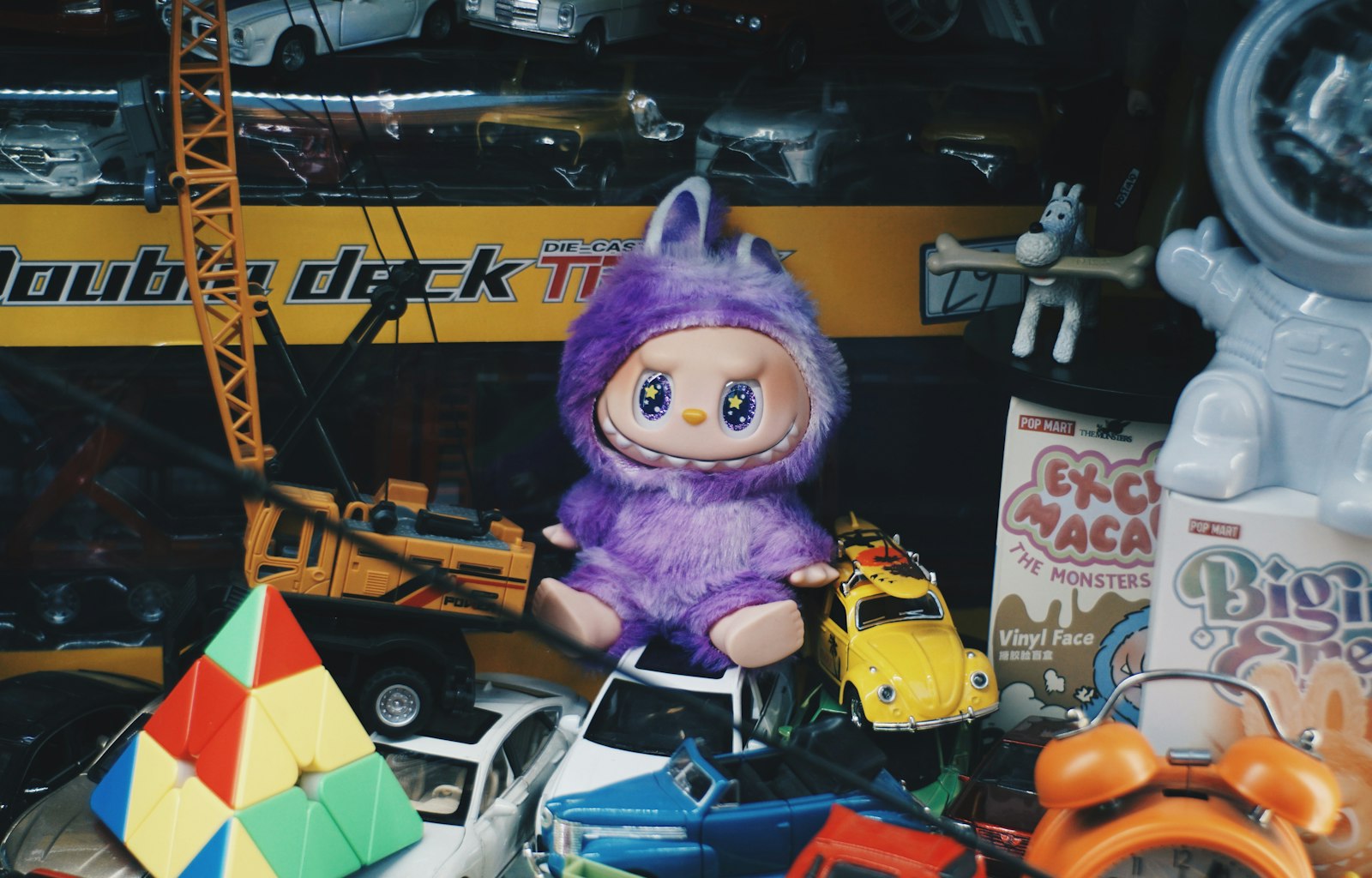


Remember last summer, when grown adults queued outside shopping malls at dawn for a fluffy monster with nine pointy teeth and the grin of a gremlin who just discovered espresso? When a vinyl plush dangling from a designer handbag counted as a personality? Pop Mart, the Beijing company behind Labubu, has now sent the bill for that summer. It reads like a hangover.
On Tuesday evening, October 27, the Hong Kong-listed toy maker said its unaudited revenue for the third quarter fell by 45 to 50 percent compared with the same period last year. No region escaped. Sales in the Americas dropped by 70 to 75 percent. Asia Pacific lost 65 to 70 percent, Europe and other markets 50 to 55 percent. Even mainland China, the home market, slipped by 25 to 30 percent. There, online sales sank by 45 to 50 percent while physical stores and vending machines lost only 5 to 10 percent.
Investors had braced for bad news, just not this much of it. Analysts at Jefferies had expected a decline of roughly 30 percent, CNBC reported. The shares opened more than 6 percent lower in Hong Kong on Wednesday before recovering part of the loss. Since January they have shed more than 30 percent of their value.
The cruel math of a record year
Part of the shock is pure arithmetic. A year ago, Pop Mart’s third-quarter revenue grew by roughly 250 percent. Comparing anything with a quarter like that is like comparing your average Tuesday night with the night Beyoncé played your hometown. You will lose.
Arithmetic alone does not explain the pattern, though. The steepest declines came exactly where Labubu was the newest import: in the Americas, in Asia Pacific outside China and in Europe. In 2025 the Monsters line, which includes Labubu, generated close to 40 percent of Pop Mart’s revenue. When those annual figures came out in March, the shares fell by more than a fifth in a single day, as investors worried about precisely this dependency. Chief executive Wang Ning said at the time that growth did not rely on Labubu alone. The third quarter has put that sentence to its hardest test yet.
From Kasing Lung’s sketchbook to the designer handbag
To understand why the drop is so steep, you have to remember how strange the rise was. Labubu began as a character in The Monsters, a picture book world created by Hong Kong-born artist Kasing Lung. Pop Mart turned the creature into collectible figures sold in blind boxes: you pay, you open, you find out which version you got. Then in 2024 Lisa from Blackpink showed off her Labubu and the plush escaped the toy aisle for good. It became a bag charm, a fashion accessory clipped to luxury leather, a status signal that cost a fraction of the bag it hung from.
Fashion has seen this movie before. In the 1990s it was Beanie Babies, the bean-filled animals whose maker “retired” designs to fuel scarcity until the secondary market collapsed around the turn of the millennium. In the 1980s it was Cabbage Patch Kids, which set off actual scuffles in department stores. The blind box adds a slot machine thrill to that formula. The bag charm adds runway credibility. What neither can add is permanence. A trend defined by being hard to get loses its point the moment everybody has one.
Secondhand prices for Labubu products had already cooled earlier this year, analysts noted in March. That was the canary in the vinyl mine. Our reading of how these cycles usually end: when resale prices fall, the speculators leave first. Then go the buyers who only joined because the speculators made the thing look valuable.
Is the Labubu hype really over?
Not necessarily. Here the story gets more interesting than a simple boom and bust.
Pop Mart is still expanding, with flagship stores in cities such as New York, Milan and Paris, according to CNBC. It is pushing other characters, including Skullpanda, Hirono and Twinkle Twinkle. Jefferies expects fourth-quarter revenue to rise about 3 percent compared with the third quarter, though that would still leave it roughly 34 percent below last year’s level. The analysts also cut their earnings estimates for 2027 and 2028 by 9 to 12 percent.
What you are watching is the difference between a craze and a brand. Hello Kitty has survived five decades of trend cycles because Sanrio treats her as a character with a world rather than a product with a moment. Pop Mart clearly wants to be that kind of company, with a planned film project with Sony plus ambitions in theme parks and licensing. Whether Labubu can make the jump from must-have to evergreen will matter far more for the company than any single quarter.
What it means for you
If you own a Labubu, nothing about it has changed. It still grins. If you bought one as an investment, this quarter is a reminder that a toy’s resale value is a mood, not an asset class. If you are the kind of shopper who feels a pull every time a blind box promises a rare secret edition, it may be worth noticing how much of the thrill came from the hunt rather than the thing itself. The hunt, as Pop Mart’s numbers show, is the first part to get boring.
Meanwhile the fashion world will find its next bag charm. It always does. The only open question is whether it will once again come with teeth.
Key facts at a glance
- What: Pop Mart said on October 27, 2026 that its unaudited third-quarter revenue fell 45 to 50 percent year on year.
- Regions: Third-quarter revenue dropped 70 to 75 percent in the Americas, 65 to 70 percent in Asia Pacific, 50 to 55 percent in Europe and other regions plus 25 to 30 percent in mainland China.
- Comparison: In the third quarter of 2025, Pop Mart’s revenue had grown by roughly 250 percent.
- Forecast: Jefferies had expected a decline of about 30 percent and now sees fourth-quarter revenue roughly 34 percent below the previous year.
- Labubu: The Monsters line that includes Labubu generated close to 40 percent of Pop Mart’s revenue in 2025.
FAQ
Why did Pop Mart revenue fall in the third quarter of 2026?
The decline coincides with cooling demand for Labubu figures, especially outside China. The comparison is also tough because Pop Mart’s revenue grew about 250 percent a year earlier.
Is the Labubu hype over?
Demand has clearly cooled, with Pop Mart’s sales in the Americas down 70 to 75 percent in the third quarter of 2026. Whether Labubu can become a lasting character brand remains open.
Where did Pop Mart sales fall the most?
The steepest decline was in the Americas, where third-quarter revenue fell 70 to 75 percent. Mainland China held up best with a drop of 25 to 30 percent.
Sources
- Labubu-maker Pop Mart’s shares extend declines as third-quarter sales plunge (CNBC)
- Pop Mart reports 45 to 50% revenue decline as Labubu sales weaken across major markets (South China Morning Post)
- Labubu hype is over: Pop Mart’s sales plummet by 50% (RetailDetail)
- Pop Mart Reports 45% to 50% Drop in Third-Quarter Revenue (TokenPost)
- Pop Mart shares tumble on concerns over reliance on Labubu IP (Sharecast via Hargreaves Lansdown)