
Hollywood loves a biopic the way fashion loves a reissue: take something everybody already adores, polish it, add a famous face and hope nobody compares it to the original. The Fred Astaire biopic now taking shape at Sony raises the stakes on all three counts. This week, The Hollywood Reporter revealed that Talia Ryder has joined the cast, only days after Variety reported that Sabrina Carpenter and Margaret Qualley had signed on alongside Tom Holland. Spider-Man, a pop star whose stage shows come with more outfit changes than a couture fitting, plus an actress with serious dance training: if this were fantasy football, it would be a very strong draft.
Who plays whom and who is behind the camera
Holland plays Fred Astaire and also produces. Carpenter plays Ginger Rogers, the partner who, as the famous line goes, did everything he did, only backwards and in high heels. Qualley plays Adele Astaire, Fred’s older sister and his first partner on stage. Ryder, who made her Broadway debut in Matilda the Musical and appeared in Steven Spielberg’s West Side Story, takes the role of June Allyson, the dancer and MGM actress.
Directing is Paul King, the man behind Paddington and Wonka, which is to say a director with a proven talent for charm, marmalade and musical numbers. He co-wrote the screenplay with Steven Levenson, based on Kathleen Riley’s book The Astaires: Fred & Adele. Amy Pascal produces. Numéro reports that filming should begin in early 2027. There is no release date yet, so if a website promises you one, treat it the way you would treat your horoscope.
The sister who got there first
The smartest decision may be the book they picked. A Fred Astaire film could easily have been ninety minutes of top hats, staircases and Ginger’s feathers. Instead, the story begins with the act that came before Hollywood. Fred and Adele performed together from 1905, first in vaudeville, then as stars of Broadway and London’s West End in the 1920s. By many accounts Adele was the bigger star of the pair, the one the critics swooned over. In 1932 she married Lord Charles Cavendish, a son of the Duke of Devonshire. Then she retired. Fred, suddenly a solo act, had to work out who he was without her. In pop terms, that split would have produced at least one tell-all album.
King has said as much. Quoted via Deadline, he noted that Fred left “a timeless legacy of dance on film” while Adele’s work “has been lost to history”. Casting Qualley, who trained as a dancer before she turned to acting, suggests Adele will get more than a cameo in her brother’s story.
The Hollywood chapter is the one you know. Fred and Ginger made nine films together at RKO between 1933 and 1939, including Top Hat, Swing Time and Shall We Dance. They reunited one last time for The Barkleys of Broadway in 1949. In 1999 the American Film Institute placed Astaire fifth on its list of the greatest male screen legends of classic Hollywood.
The Billy Elliot question
Every article about this film eventually asks the same thing, so we will not pretend to be above it: can Tom Holland actually dance like that? Astaire insisted on filming his routines in long takes with his whole body in frame, so audiences could see that no clever editing was doing the work. That is a brutal standard for any actor. Holland, to his credit, has said he plans to perform the dance sequences himself and his CV backs him up: long before he was swinging between skyscrapers, he played the title role in Billy Elliot the Musical in London.
Whether he can move with Astaire’s famously weightless ease is something nobody can judge until the cameras roll. The casting shows the intention, though. Carpenter came up through Disney Channel and now headlines arenas with choreographed shows, Ryder comes from musical theatre, Qualley from dance. This is a cast built to sing and move, not one built around a very busy body double.
One detail deserves an honest footnote. Astaire, who died in 1987, guarded his image closely and, according to widely cited biographical accounts, was not keen on the idea of a dramatised film about his life. How the producers have dealt with that has not been explained in the coverage so far. Expect it to come up once the press tour starts, probably somewhere between questions about Holland’s tap shoes.
The best-dressed man who hated his top hat
Now for the part that justifies a fashion magazine writing about a film that has not even been shot. Astaire was one of the great menswear influences of the 20th century and what he wore off-screen still looks remarkably current. Gentleman’s Gazette notes that many of his formal suits came from the Savile Row tailor Anderson & Sheppard, while he had been a Brooks Brothers customer since his teens. English tailoring meets American ease: the transatlantic merger nobody needed a regulator for.
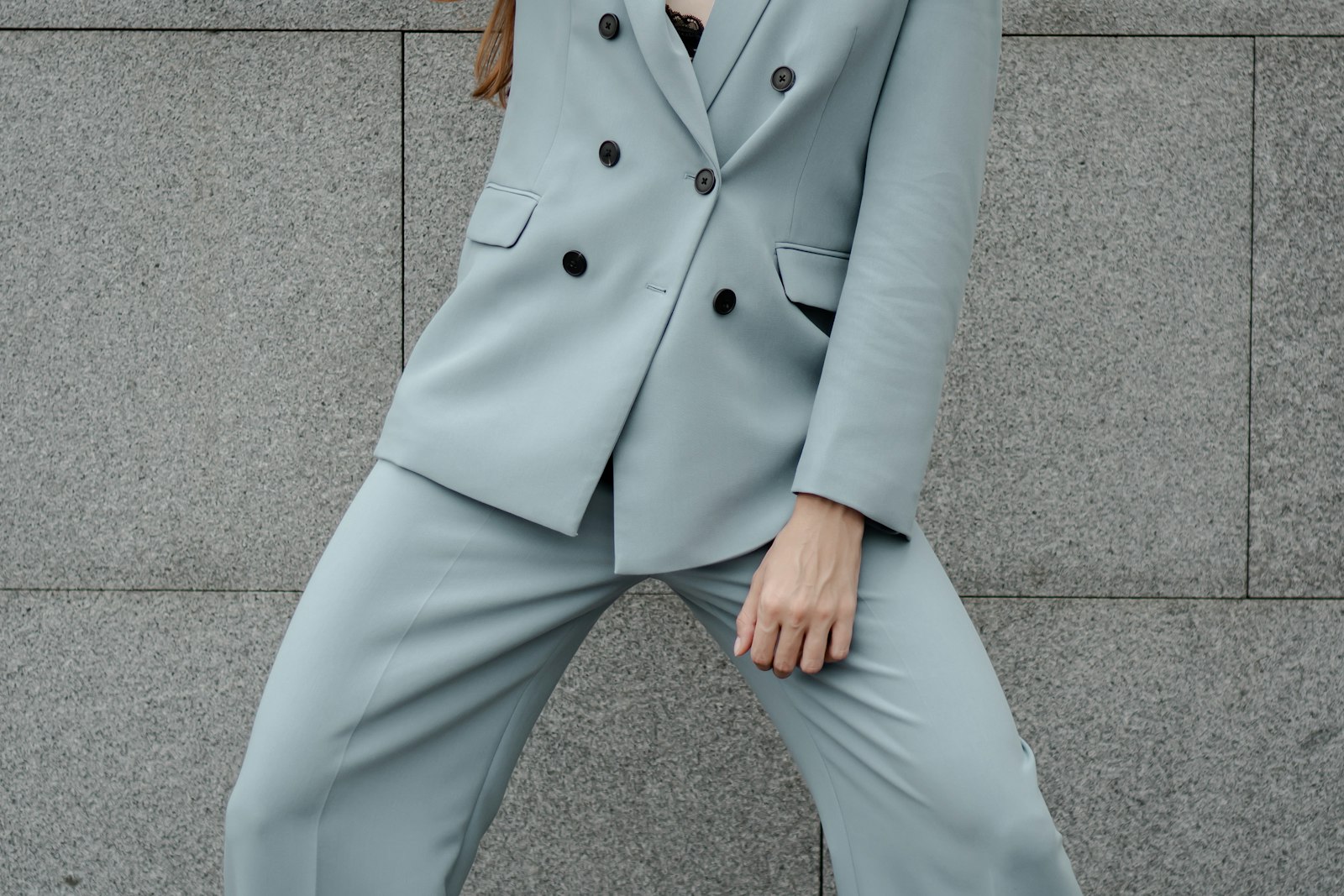
His habits were delightfully personal. Instead of a leather belt, he often threaded an old necktie or a silk handkerchief through his belt loops, a trick menswear fans still copy. He liked pastel shirts with button-down collars, pocket squares stuffed in casually rather than folded like origami, plus two-tone spectator shoes. His trousers were cut short, with almost no break, so you could see his feet while he danced: tailoring as stage lighting. And the best twist of all, the man most associated with white tie reportedly disliked top hat and tails and preferred a sports jacket and slacks. Picture Karl Lagerfeld secretly longing for a hoodie.
Look at menswear right now: soft tailoring, roomy pleated trousers, shirts in pink and butter yellow. That is a wardrobe Astaire was wearing in the 1930s. A big studio film, with costume designers recreating those looks and a cast promoting it on red carpets, could push that style further into the mainstream. That is our forecast, not a fact, but it would not be the first time a costume department started a trend: ask anyone who bought a camel coat after binge-watching a period drama.
A film about doing it for real
The most charming thing about this project is its premise. In a cinema landscape full of capes, multiverses and green screens, a studio is betting on two people dancing in one take, in clothes that move with them. That is very hard to fake and very easy to love when it works. Tom Holland, one of the most famous men in spandex of his generation, is trading the suit for a suit. If the film delivers, it will do more than revive interest in Fred Astaire. It will remind a lot of people that elegance was never really about what you wear, but about how lightly you wear it.
Key facts at a glance
- What: a Fred Astaire biopic from Sony, directed by Paul King (Paddington, Wonka), produced by Amy Pascal.
- Cast: Tom Holland as Fred Astaire, Sabrina Carpenter as Ginger Rogers, Margaret Qualley as Adele Astaire, Talia Ryder as June Allyson.
- Source material: Kathleen Riley’s book “The Astaires: Fred & Adele”; screenplay by Paul King and Steven Levenson.
- Timing: filming expected to start in early 2027; no release date announced.
- Style legacy: Astaire wore neckties as belts, pastel button-down shirts and short-cut trousers; his formal suits came from Anderson & Sheppard.
FAQ
Who plays Fred Astaire in the new biopic?
Tom Holland, who also produces. He has said he plans to perform the dance sequences himself.
When will the Fred Astaire biopic be released?
There is no release date yet. Filming is expected to begin in early 2027.
Why was Fred Astaire a menswear icon?
He combined Savile Row tailoring with American ease, wore old ties as belts, favoured pastel shirts and had his trousers cut short so his feet stayed visible while dancing.
Sources
- Talia Ryder Joins Tom Holland, Sabrina Carpenter in Fred Astaire Biopic (The Hollywood Reporter)
- Margaret Qualley and Sabrina Carpenter Join Tom Holland in Fred Astaire Biopic (Variety)
- Talia Ryder Joins the Cast of Tom Holland-Led Fred Astaire Biopic (mxdwn Movies)
- What anticipated project will gather Tom Holland, Sabrina Carpenter and Margaret Qualley? (Numéro)
- Fred Astaire: Gentleman of Style (Gentleman’s Gazette)
- Fred Astaire (Wikipedia)