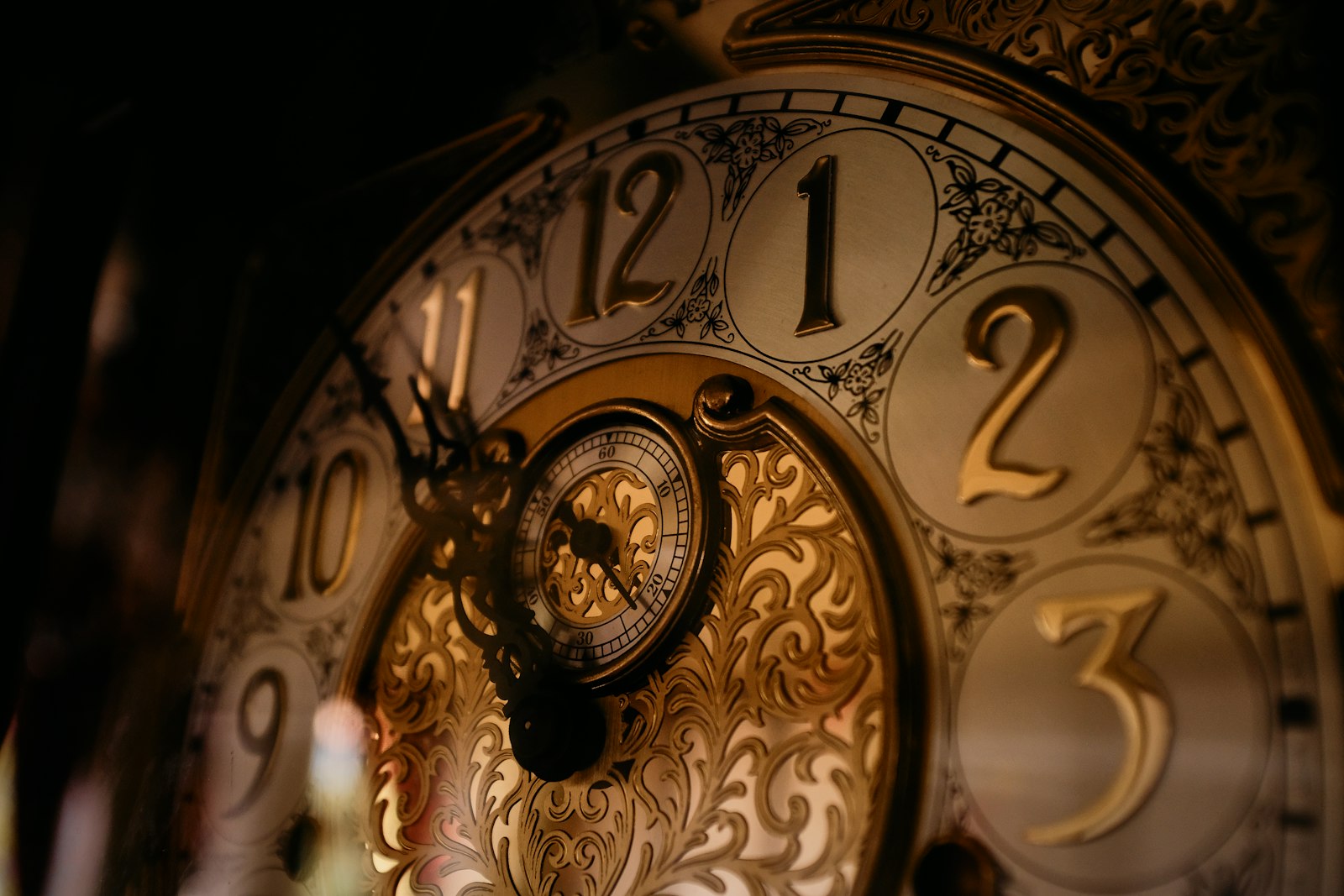


At 3 a.m. local summer time on Sunday, October 25, much of Europe did what it has done in coordinated fashion since 1980: it agreed to live one hour twice. Clocks across the EU fell back to 2 a.m. The UK made the same switch. You either slept an extra hour or spent it scrolling. Your phone adjusted silently. Your body, unfortunately, does not have an automatic update.
Cher sang “If I Could Turn Back Time” in 1989. The European Union has spent the past seven years trying to stop doing exactly that, so far without success. Before we get to Brussels, though, it is worth asking what the switch actually does to you.
The extra hour is the easy part
Of the two annual changes, autumn appears to be the gentler one. Some of the clearest numbers come from cardiology. An analysis of more than 42,000 heart attack admissions in Michigan hospitals between 2010 and 2013, presented at the American College of Cardiology’s 2014 scientific session, found 25 percent more heart attacks on the Monday after clocks sprang forward compared with other Mondays. On the Tuesday after clocks fell back, there were 21 percent fewer. The total number of heart attacks across those weeks did not change. The researchers concluded that the time change seems to affect the timing of events rather than how many occur.
Autumn is not automatically harmless, however. A Danish study of 185,419 psychiatric hospital contacts for depression between 1995 and 2012 found that the transition from summer time to standard time was associated with an 11 percent increase in the rate of depressive episodes. The lead researcher, Søren D. Østergaard of Aarhus University, called for more awareness of depression in the weeks after the switch. This is an association from register data rather than proof of cause. One plausible factor is the abrupt arrival of dark afternoons: overnight, sunset moves an hour closer to the end of your working day.
Your body clock does not read the news
Your internal circadian clock runs on roughly 24 hours and resets itself mainly with light, particularly in the morning. That is why sleep scientists care so much about which time a country chooses permanently. The American Academy of Sleep Medicine argued in a position statement published in late 2023 that the United States should drop seasonal changes in favor of permanent standard time, which in its words “aligns best with human circadian biology”. The statement was endorsed by 20 organizations.
Europe’s health researchers lean the same way. The Dutch public health institute RIVM concluded in a 2019 review that year round standard time would be better for public health than permanent summer time, while noting that most of the studies it assessed were carried out outside the Netherlands. In plain terms: brighter mornings appear to be more useful to your biology than longer evenings, even if long summer evenings are better for your social calendar.
For the coming weeks the practical advice is unglamorous. Get some daylight in the morning, keep your wake up time steady and treat the early darkness as an invitation to a calmer evening rather than a second dinner in front of a screen. If your mood dips noticeably and stays low as the days shorten, that is worth discussing with a doctor instead of blaming it on the calendar.
Why Europe keeps doing it anyway
Politically, the clock change is the zombie of EU law. In 2018 the European Commission ran a public consultation that drew about 4.6 million responses. Of these, 84 percent wanted to stop changing the clocks. The Commission proposed a directive that September. In March 2019 the European Parliament backed the plan by 410 votes to 192 and set 2021 as the target date. Then the file landed at the Council, where national governments sit. It has been stuck there ever since.
The sticking point is where to stop. Some governments want permanent summer time with long evenings. Others prefer permanent standard time with lighter mornings. Many fear a patchwork in which neighboring countries end up an hour apart, which would be a headache for trains, flights, trade and anyone trying to schedule a video call across a border. Spain’s prime minister Pedro Sánchez pushed in October 2025 for 2026 to be the final year of clock changes, with support from Finland and Poland. It did not happen. According to the Council, no final decision has been taken on the matter and no timeline has been defined.
The Commission has put the topic back into its 2026 work program and commissioned a study of possible scenarios, expected by the end of this year. In the meantime it has already published the clock change dates through 2031. The next spring switch is on March 28, 2027. The last date on the current list is October 26, 2031. Even with a quick agreement, reports suggest an end to the ritual would not come before 2027 or 2028.
A ritual on repeat
There is a small bonus week for anyone with friends across the Atlantic. The United States and Canada stay on summer time until November 1, so for a few days the gap between Europe and North America is one hour smaller than usual. Then everything snaps back into place.
Every October now feels a little like Groundhog Day, except that Bill Murray’s weatherman eventually learned something. The science leans toward permanent standard time. The politics lean toward waiting for the next study. If Brussels ever does settle the question, the last clock change in Europe may turn out to be the most celebrated hour nobody actually needed.
This article is for general information only and does not replace advice from a doctor or other qualified health professional.
Key facts at a glance
- When: Clocks across the EU went back one hour in the early hours of Sunday, October 25, 2026.
- North America: The United States and Canada switch from summer time to standard time on November 1, 2026.
- EU status: The European Parliament voted 410 to 192 in March 2019 to end seasonal clock changes, but EU governments in the Council have never agreed on a common position.
- Sleep science: The American Academy of Sleep Medicine recommends permanent standard time, saying it aligns best with human circadian biology.
- Note: for general information only, not medical advice.
FAQ
When did the clocks go back in 2026?
In the EU the clocks went back one hour in the early hours of Sunday, October 25, 2026. The United States and Canada follow on November 1, 2026.
Is the EU ending the clock change?
Not yet. The European Parliament backed ending it in 2019 but EU governments have not agreed. The Commission has already published clock change dates through 2031.
Is permanent standard time healthier than summer time?
Sleep medicine experts such as the American Academy of Sleep Medicine say permanent standard time aligns best with human circadian biology. The Dutch public health institute RIVM reached a similar conclusion in a 2019 review.
Sources
- Clocks Go Back an Hour Across Europe as EU Plan to Scrap Time Changes Stays Stuck (International Business Times)
- Spain’s 2026 plan to end clock changes has failed (Euro Weekly News)
- Clocks go back 25 October 2026: EU clock change explained (Continental Brief)
- New position statement supports permanent standard time (American Academy of Sleep Medicine)
- Daylight Saving Impacts the Timing of Heart Attacks (American College of Cardiology)
- Daylight saving time may increase depression rates (Healio)